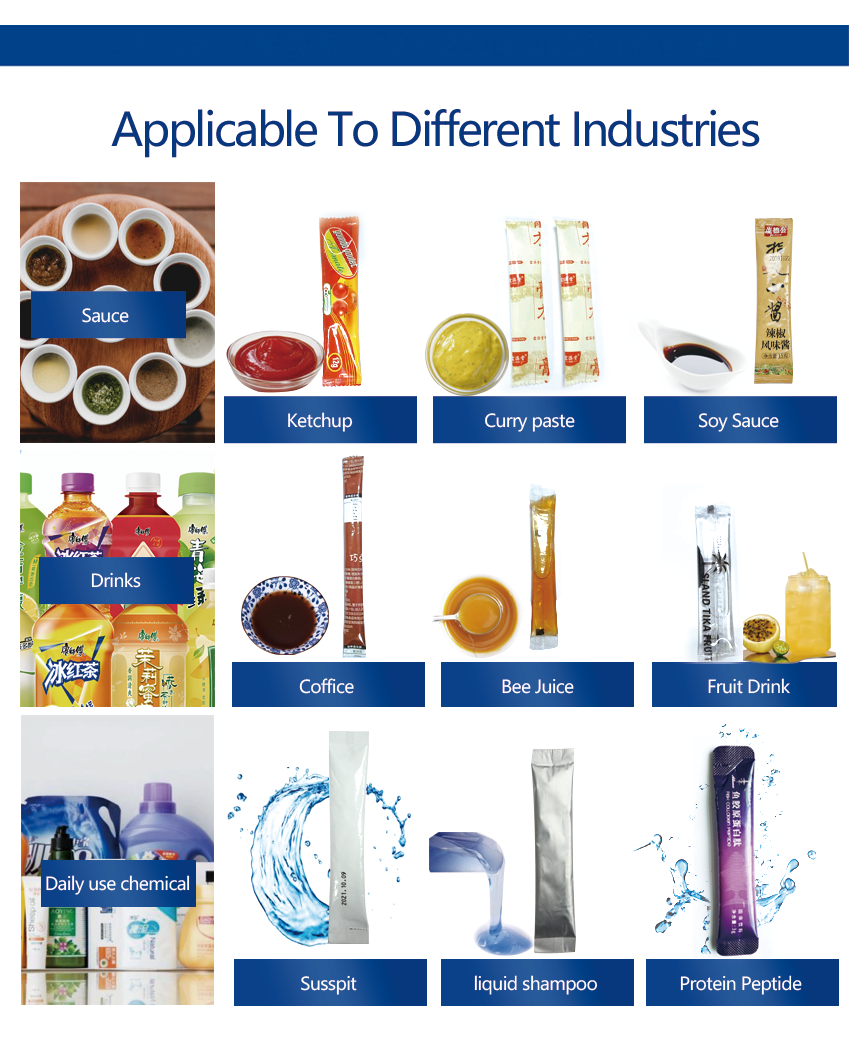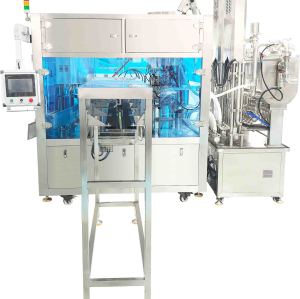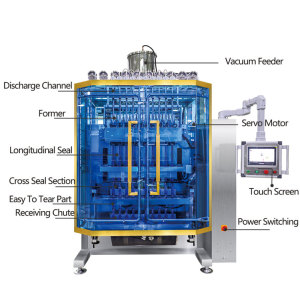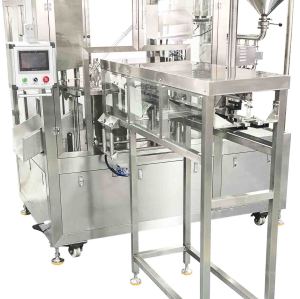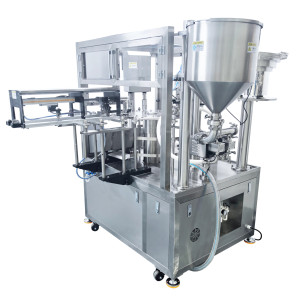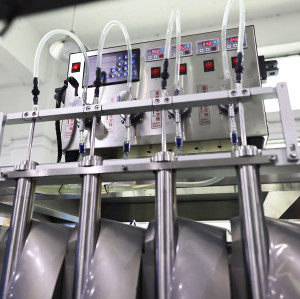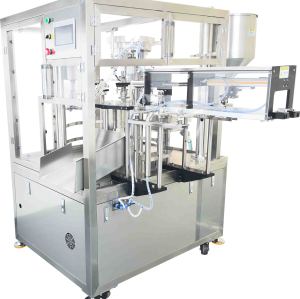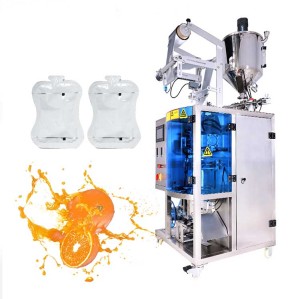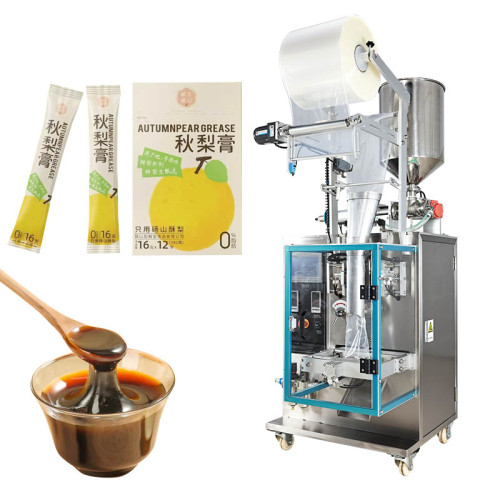
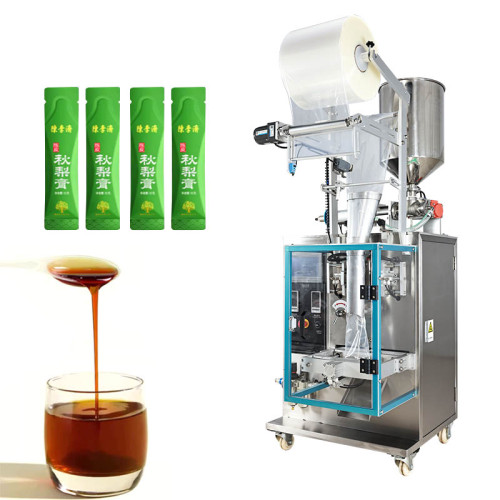
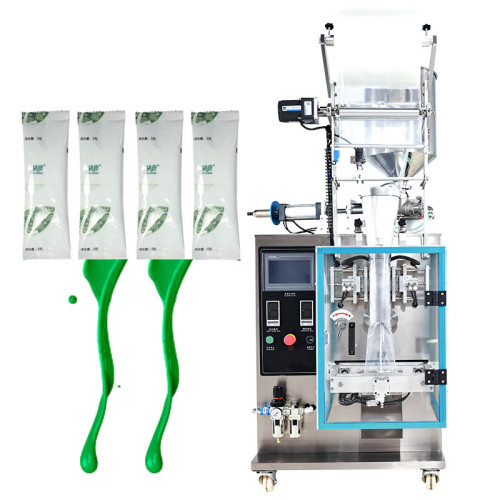
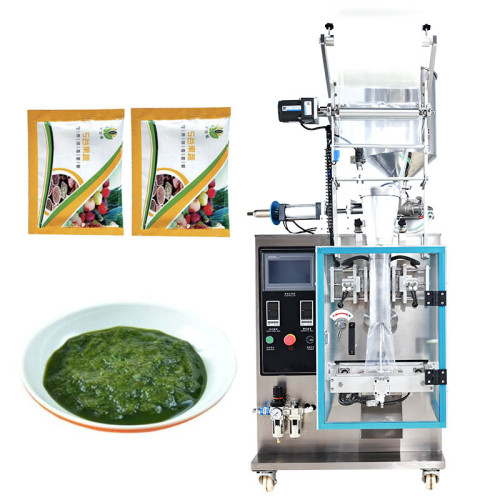
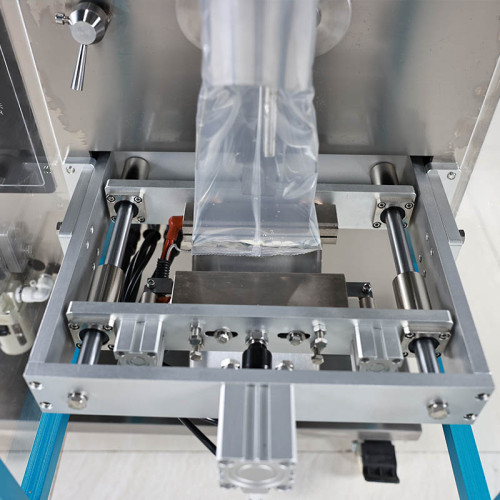
240mm filling machine liquid manufacturer
- Model
- FM007
Item specifics
- Packaging products
- Liquid and pastes
- Filling specification
- 30-2000ML
- Hopper size
- 150L(304 stainless steel )
- Machine power
- 8Kw
Review
Description
Introduction of Filling Machine Liquid Manufacturer
I. Core Working Principle and Characteristics of filling machine liquid
Single-row Sequential Operation: Materials are fed in a single row via a conveyor belt or vibratory feeder, entering the forming unit one by one according to a set rhythm. This is fundamentally different from multi-row parallel packaging machines.
Continuous Bag Making: Using roll film, it is formed into a cylindrical shape by the forming unit, longitudinally sealed to form continuous bags, and then filled and cut during transverse sealing to form individual packages. This is the most common form of "vertical packaging."
II. Structural and Application Characteristics
Relatively Compact Structure:
Due to its single-row design, its transverse width is usually narrower than multi-row machines, resulting in a relatively smaller footprint, but its length (involving feeding, bag making, and discharge) may be longer.
The mechanical structure is relatively standardized, making maintenance and debugging relatively intuitive.
Suitable for Medium to High Speeds:
The speed range is typically between tens of bags/minute and over two hundred bags/minute, depending on material characteristics, filling method, and bag size.
It is an ideal choice for balancing speed, flexibility, and cost, and is very suitable for production lines with stable output.
Flexible Packaging Options:
Can produce various bag types including back-seal (pillow bag), three-side seal, and four-side seal.
Adaptable to various materials such as granules, powders, liquids, pastes, and small solid lumps (e.g., candy, biscuits, hardware) by changing different formers and fillers.
High-Precision Metering:
Depending on material characteristics, it can be equipped with high-precision metering devices such as volumetric cup metering, screw metering, combination scales (multi-head scales), liquid pumps, and weighing modules to ensure consistent weight for each bag.
III. Advantages
High Flexibility:
Relatively easy to change production lines. By changing a few parts (such as formers, filling tubes, and metering tools) and adjusting parameters, it can adapt to products of different sizes, shapes, and weights.
Excellent Cost-Effectiveness:
In the medium speed range, single-row machines typically require less investment than multi-row parallel machines and can meet the needs of most large-scale production, resulting in a high return on investment.
Stable and Reliable Operation:
Mature technology, long-term proven mechanical structure, relatively low failure rate, and easy troubleshooting and maintenance.
High degree of automation integration:
Easy to connect with front-end feeders, combination scales, checkweighers, metal detectors, and back-end cartoning, case packing, and palletizing machines to form an automated packaging production line.
High material utilization:
Using roll film, packaging bags can be customized according to product size, reducing material waste.
Limitations of Filling Machine Liquid
** Limitations**
For ultra-large-scale production (e.g., thousands of bags per minute), the speed of a single-row bagger may become a bottleneck. In this case, multi-row parallel bags or higher-speed rotary packaging machines may need to be considered.
**High requirements for the feeding system:**
To achieve stable high-speed packaging, the material must be stably and orderly arranged and transported to the filling station. Disorganized or easily sticky materials require more complex feeding and handling systems.
**Unsuitable for highly irregular or fragile items:**
For very fragile, extremely irregularly shaped products, or products requiring strict positioning within the packaging, single-row baggers may not be the best choice. Customized horizontal packaging or cartoning equipment may be required.