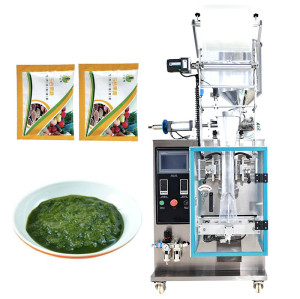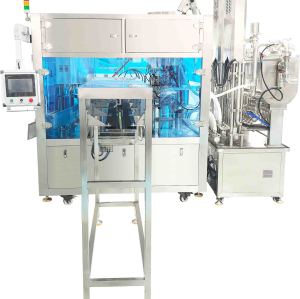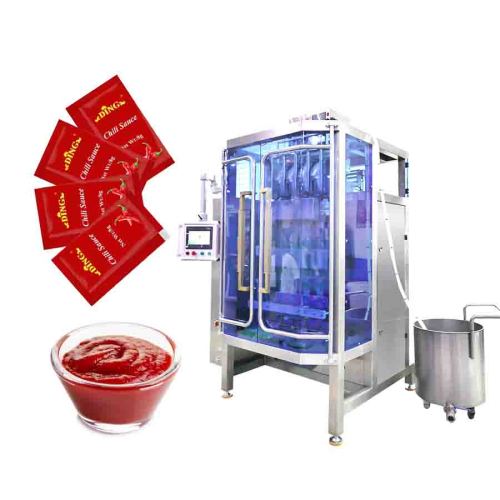
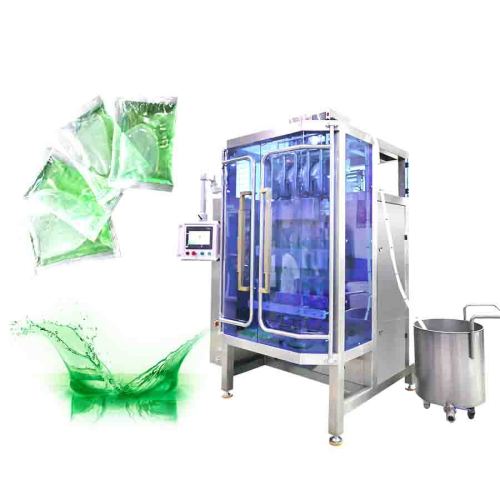
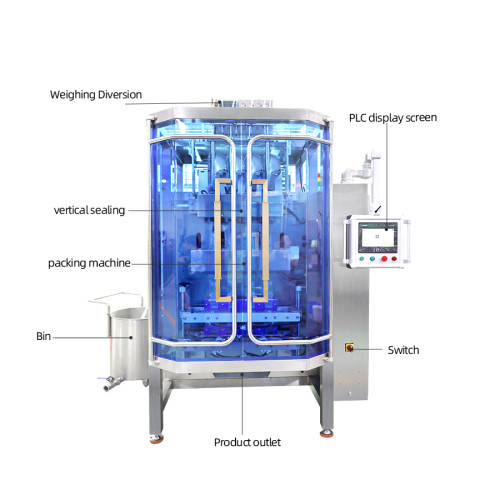
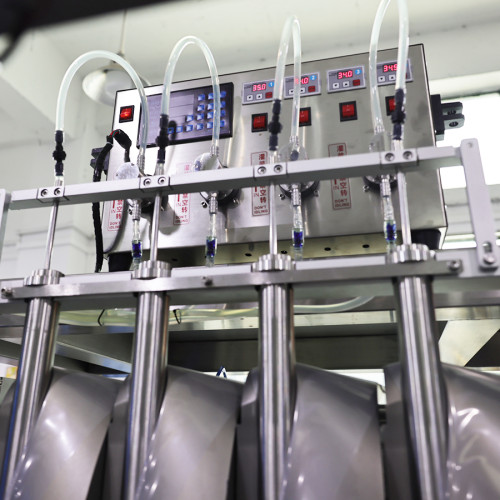
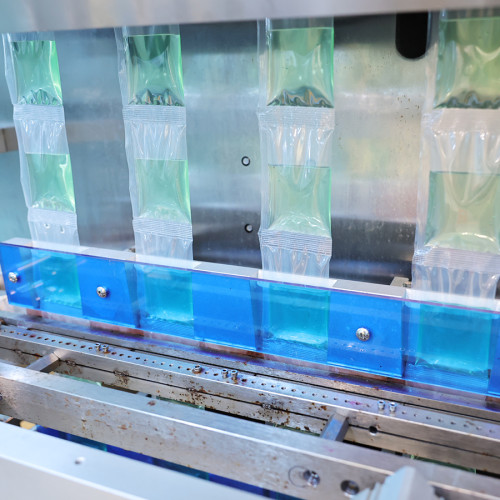
Four-lanes liquid Packing Machine manufacturer
Four-lanes liquid  Packing Machine manufacturer
Model
FM005

Item specifics

Packaging products
Liquid and pastes
Filling specification
30-2000ML
Hopper size
150L(304 stainless steel )
Machine power
8Kw

Review

Description

Introduction of Four-lanes liquid Packing Machine

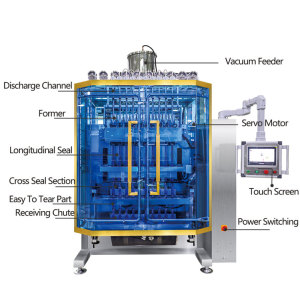
main components of a four-column/lanes liquid packing machine

I. Power and Transmission System

This is the "heart" and "muscles" of the equipment.

Main Motor and Reducer: Provides the power for the entire machine's operation and adjusts the operating speed to the appropriate level via the reducer.

Drive Shaft, Chain, Sprockets, and Synchronous Belt: Precisely and synchronously transmits power to each moving part, ensuring coordinated operation at all workstations.

II. Packaging Material Handling System

Responsible for conveying and forming the packaging film (roll film).

Film Holder: Used to hold the rolled packaging film.

Tensioning Device: Maintains stable film tension during conveying, preventing wrinkling or breakage.

Photoelectric Tracking Device (Photoelectric Eye): Detects color marks on the film, ensuring accurate pattern positioning and guaranteeing correct positioning for subsequent bag cutting and coding.

Forming Unit: One of the key components. Gradually rolls the flat film into a cylindrical shape, preparing it for filling. Four rows of machines have four forming units arranged side-by-side.

Longitudinal Sealing Device: Performs longitudinal heat sealing on the rolled film to form a continuous tubular shape.

III. Filling System

This is the "core actuator" of the equipment, determining the filling accuracy and hygiene.

Tank and Level Control: Stores the liquid to be filled and maintains a constant level through floats, level sensors, etc., ensuring stable filling pressure.

Filling Valve: The most critical component. Four-row machines typically have 4 or 8 (double-row) filling valves. Common types include:

Gravity Filling Valve: Fills using the liquid's own gravity, suitable for low-viscosity liquids.

Pressure Filling Valve: Applyes back pressure, suitable for carbonated beverages or easily foaming liquids.

Peristaltic Pump/Piston Pump Filling: Fills using precise pump metering, suitable for viscous liquids (such as yogurt, sauces) or applications requiring extremely high precision.

Quantification Mechanism: Works with the filling valves to ensure consistent volume per bag. This can be a volumetric cup, an adjustable-stroke piston, or a servo control system.

IV. Horizontal Sealing and Cutting System

Completes the sealing and separation of the packaging bags.

Horizontal Sealing Device (Horizontal Sealing Roller or Horizontal Sealing Clamp): Another core component. It performs horizontal heat-sealing on the liquid-filled film tubes, forming individual bags and simultaneously cutting the connection between bags. Horizontal sealing typically integrates:

Heating Element (Heating Wire/Thermistor): Provides the heat required for sealing.

Cutter: Located in the middle of the horizontal sealing grooves, used for cutting.

Date Printing Device: Imprints the production date, batch number, etc., onto the sealing edge during sealing.

V. Control and Electrical System 

The "brain and nervous system" of the equipment.

PLC (Programmable Logic Controller): Controls the overall machine's operating logic, timing, and actions.

Human-Machine Interface (Touch Screen): Used for parameter setting (such as bag length, temperature, output), operation control, and fault display.

Frequency Inverter: Regulates the main motor speed, thereby controlling the production speed.

Temperature Controller: Precisely controls the temperature of the longitudinal and horizontal sealing processes to ensure sealing quality.

Various sensors (proximity switches, photoelectric switches, etc.): Detect the position and status of various components of the equipment and provide feedback to the PLC for precise control.

VI. Frame and Housing

Main Frame: A robust steel structure supporting all components.

Stainless Steel Panel and Protective Cover: Meets food hygiene requirements, protects operator safety, and prevents foreign objects from entering.

VII. Auxiliary Systems (Optional, depending on configuration)

CIP Cleaning System: Can be connected to an on-site cleaning unit for automated cleaning without disassembling internal pipelines.

Nitrogen or Vacuum Inflator: Used for filling and filling fresh products.

Checkweigher or Rejection Device: Detects and automatically rejects products that do not meet weight requirements.

Coding Machine (Independent of Horizontal Seal Date): Such as an inkjet printer, prints information at specific locations on the bag surface.
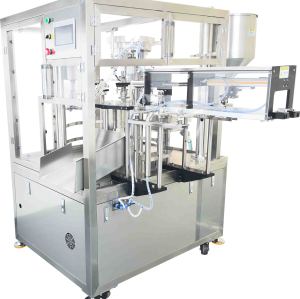
 Four-lanes liquid Packing Machine Specifications

Machine type
Four-lanes liquid Packing Machine
Packaging speed
30-50 bags/min
Measuring range
10-50ML
bag former size 
Length:40-150mm, width:40-100mm,can customize different film sizes
Hopper size
can be customized
Bag seal form
back seal,three sides seal, four sides seal are optional
Machine size
2000L × 1000W × 2000H mm
Machine weight
250-300kgs
Voltage/ power 
380V 50HZ
Machine power 
6Kw
Packaging material
PET/PE, PET/AL/PE
Applicable products
Liquid milk, fruit juice, seasonings and other low-viscosity liquids
Material for machine
304 stainless steel 

Precautions of Four-lanes Liquid Packing Machine

I. Pre-operation Preparation and Inspection for the liquid packing machine

Equipment Inspection:

Confirm that all fasteners (screws, nuts) are tight and that the drive belt/chain tension is appropriate.

Check the lubrication system and add lubricating oil to the guide rails, bearings, etc., as required by the instruction manual.

Clean the hopper, pipes, and filling head to ensure there is no residual material or impurities.

Material Preparation:

The packaging film (roll film) must meet specifications (width, thickness, material). Pay attention to tension adjustment during installation to prevent film misalignment or breakage.

Confirm that the viscosity, pH, temperature, and other parameters of the liquid material meet the equipment requirements (especially for corrosive liquids, a corrosion-resistant filling system must be selected).

Safety Protection:

Check that the protective cover, emergency stop button, safety door, and other safety devices are intact and effective.

Ensure the equipment is properly grounded to prevent static electricity or leakage.

II. Key Operating Points

Parameter Setting and Adjustment:

Precisely adjust parameters such as filling volume, heat sealing temperature, and cutter position according to the packaging specifications (capacity, speed). Initial operation requires trial packaging to test sealing and filling accuracy.

Pay attention to temperature control: Too low a sealing temperature may result in a weak seal, while too high a temperature may burn through the film material.

Filling process monitoring:

Observe the filling head for leaks; if any are found, adjust the valves or clean the seals.

Monitor liquid level stability and maintain constant pressure in the feeding system (if using a pump).

Film feeding and forming:

Ensure the packaging film is flat and wrinkle-free on the forming device, with accurate photoelectric tracking (color mark) to avoid pattern misalignment.

Adjust the film pulling mechanism to synchronize the film feeding speed with the filling rhythm, preventing excessive or insufficient film pulling.

Sealing and cutting quality:

Regularly check for uniform sealing, absence of air bubbles, and neat edges. Adjust heat sealing pressure and time.

Promptly clean residual film debris from the cutter to prevent jamming or product contamination.

III. Maintenance and Cleaning

Daily Shutdown:

Thoroughly clean the hopper, pipes, and filling nozzles to prevent material condensation and blockage (especially for syrups and oily liquids).

Clean the heat-sealing block, cutter, and other components to prevent adhesion that could affect the seal.

Drain condensate from the air lines (if using pneumatic components).

Regular Maintenance:

Check the operating status of pneumatic/hydraulic components such as pumps, cylinders, and solenoid valves.

Calibrate the metering system (e.g., peristaltic pump, servo filling) to ensure filling accuracy.

Lubricate and maintain transmission components (gears, bearings).

IV. Common Problems and Solutions

Unstable Filling Accuracy:

Check for air bubbles or sediment in the material; adjust the liquid temperature or stirring speed.

Check the sealing of the metering pump or valves; replace worn parts.

Poor Sealing or Leakage:

Adjust the heat-sealing temperature, pressure, and time; ensure the sealing area is clean.

Check the suitability of the packaging film material (e.g., heat resistance, composite layer uniformity).

Abnormal Equipment Noise/Vibration:

Immediately stop the liquid packing machine and inspect it. It may be due to loose mechanical parts, damaged bearings, or transmission misalignment.

V. Safety Precautions

Operators:

Must be professionally trained and familiar with the equipment's emergency stop, manual operation, and other basic functions.

Long hair and loose clothing must be tied up to avoid getting caught in transmission parts.

Never reach into the forming or cutting area while the machine is running.

Electrical and Energy:

Non-professionals should not disassemble the electrical cabinet. Power and gas must be disconnected during maintenance.

High-temperature components (heat-sealing blocks) must be cooled before contact to prevent burns.

Material Compatibility:

Corrosive and flammable liquids require explosion-proof and leak-proof measures, and equipment made of corresponding corrosion-resistant materials (such as 316L stainless steel, food-grade silicone tubing).

VI. Environment and Records

Keep the workshop environment dry and clean to avoid dust affecting the sensitivity of photoelectric sensors.

Record daily operating parameters, fault conditions, and maintenance details for traceability and optimization.

Applicable Products of Four-lanes Liquid Packing Machine

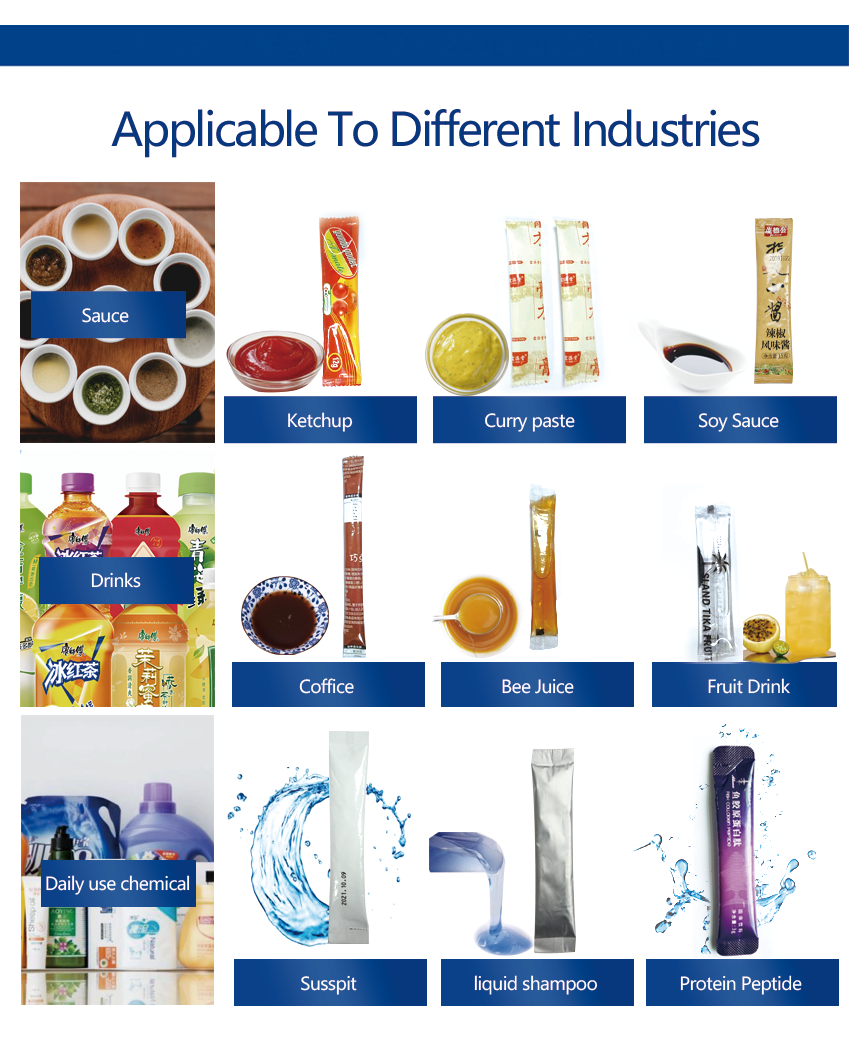
This four-lanes liquid packing machine is versatile across multiple liquid industries.
* Food: Widely used for food liquids like juice, soy sauce, ketchup, peanut butter,jelly etc.
* Daily Chemicals: Ideal for shampoo, hand soap, laundry detergent, lotion, chemical engine oil etc.
* Medical: Perfect for fluid and semi-viscous liquids like antiseptic liquid, syrup, injection liquid, other liquid medications etc.
* Health care products: ideal choice for nutrient solution, oral liquid, etc.
* Dairy products: good choice for different milk,modified milk, cream.etc.
filling machine liquid

Four-lanes liquid packaging machine video