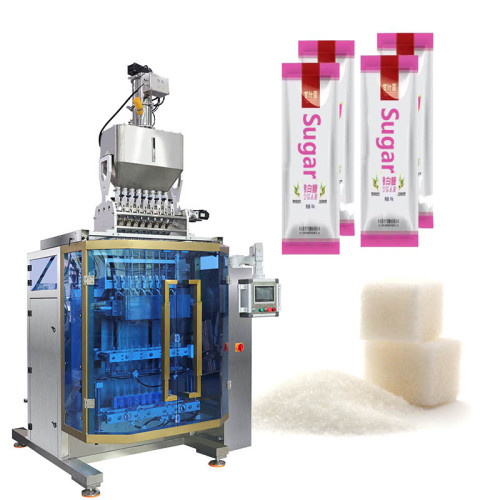
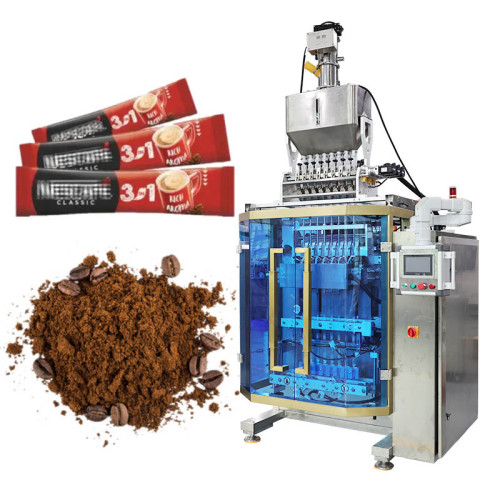
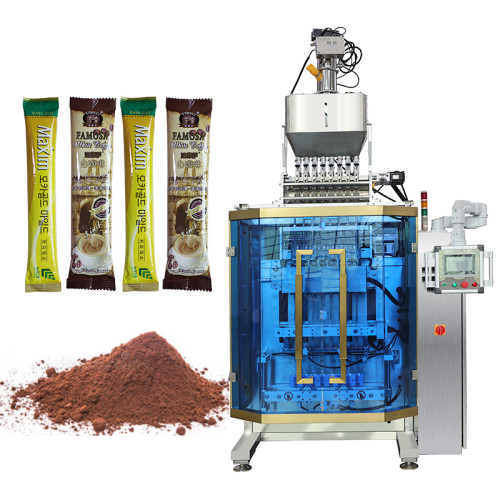
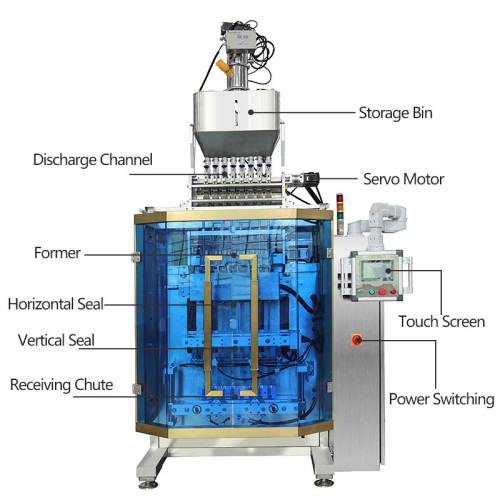
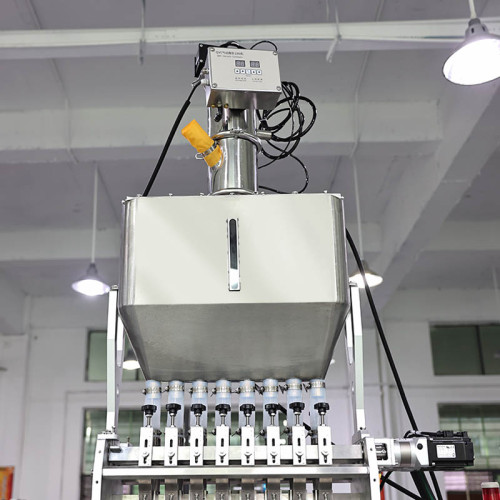
Eight-lane Heat Sealer For Plastic Bags for granule stuff
- Model
- FM013
Item specifics
- Packaging products
- granule
- Filling specification
- 30-1000ML
- Hopper size
- 150L(304 stainless steel )
- Machine power
- 6Kw
Review
Description
Introduction of Eight-lane Heat Sealer For Plastic Bags
The eight-lane heat sealer for plastic bags has the advantages below:
8 Parallel Operation: As the name suggests, the machine has 8 independent metering and filling systems operating simultaneously, meaning it can produce 8 small bags in each bag-making cycle.
High-Speed Operation: Packaging speeds can typically reach 400-1500 bags per minute or even higher (the specific speed depends on material characteristics and bag size). For large-volume orders, this significantly reduces production time and lowers unit costs.
II. Diverse Packaging Forms and Strong Adaptability
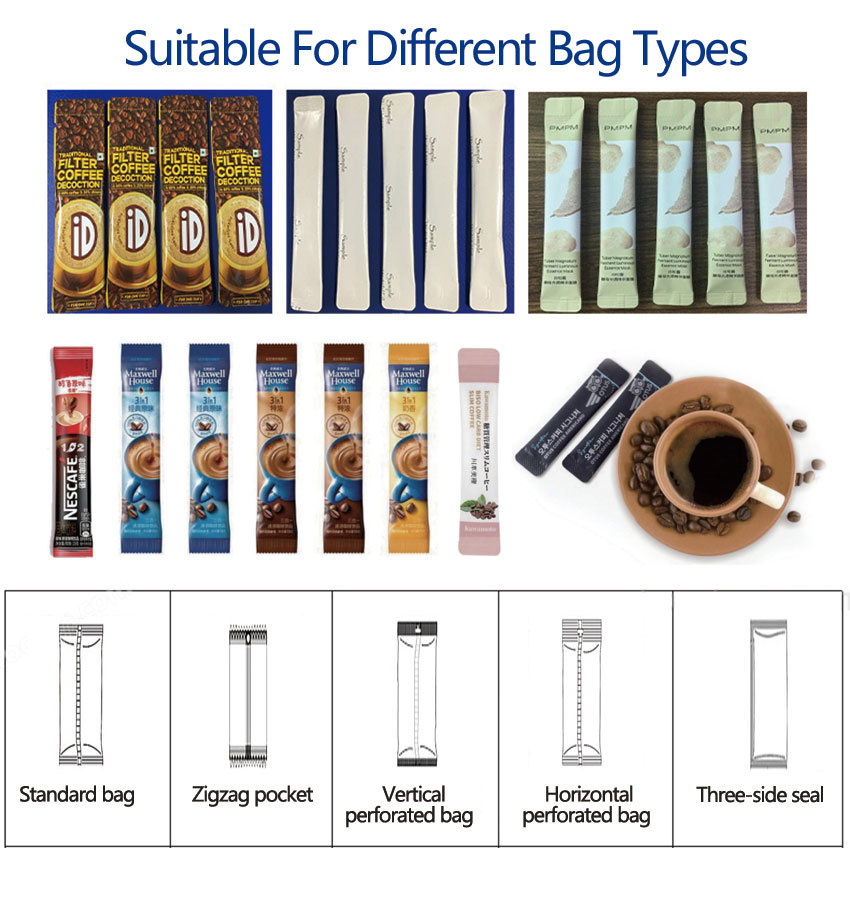
Rich Bag Types:
Back-Seal Bags: The most common bag type, with the seal on the back, aesthetically pleasing.
Three-Side Seal Bags: Good stability, suitable for thicker or irregularly shaped products.
Four-Side Seal Bags: Resembling "pillow bags" in appearance, offering a large display area.
Bags with Easy-Tear Opening/Hanging Hole: Convenient for consumers to open and use.
Can be Made into Connecting Bags: Connect multiple small bags together to form 2-packs, 4-packs, 8-packs, etc., ideal for promotional packs, pre-packaged dosages (such as pharmaceutical powders), or sets of products.
III. High Precision and Stability
Multiple High-Precision Measuring Systems: Typically employing 8 sets of servo motor-driven volumetric measuring cups or combination scales. Volumetric measuring cups are lower in cost and faster, suitable for regular granules; while combination scales (which may require external connection) offer extremely high precision (error controllable within ±0.1-0.2 grams), suitable for high-value products or products with strict weight requirements.
Stable Mechanical Structure: Utilizing a high-rigidity body and a precision cam drive system, ensuring precise and synchronized cutting and sealing actions even under long-term high-speed operation, resulting in a low scrap rate.
IV. High Degree of Automation and Intelligence
Human-Machine Interface (HMI): Equipped with a color touchscreen, parameter settings (such as bag length, temperature, speed) are intuitive and convenient. Multiple formulas can be stored for quick production changeovers.
Automatic Detection and Correction: Typically equipped with a photoelectric tracking system to ensure accurate positioning of the packaging film pattern (for films with color mark requirements); a temperature control system ensures sealing quality.
Fault Diagnosis: Features an automatic alarm function that displays common fault locations (such as no film, material breakage, door not closed, etc.), facilitating rapid maintenance. Optional Integration: Easily connects to upstream combination scales, elevators, and downstream checkweighers, metal detectors, case packers, etc., to form a fully automated production line.
V. Excellent Material Compatibility and Cost Savings
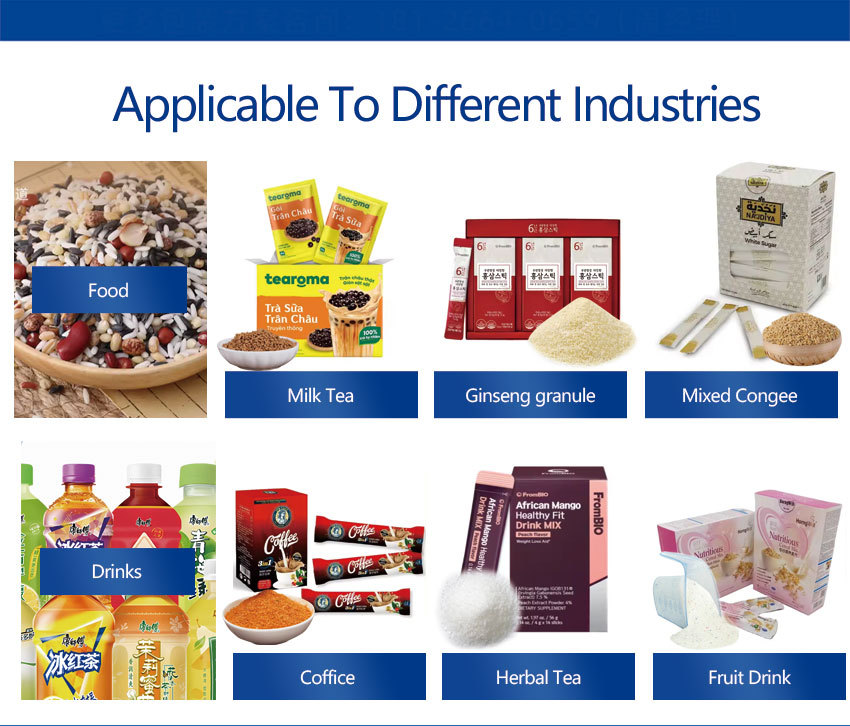
Suitable for various packaging materials: Can use roll film (such as composite film, aluminized film, pure aluminum film, paper-plastic, etc.). Compared to prefabricated bags, roll film is less expensive and easier to store.
Saving Packaging Materials: Because it is bag-made, the bag size can be flexibly adjusted according to the actual volume of the product, reducing packaging material waste.
VI. Hygiene and Safety Design
Easy to Clean: Parts in contact with materials are typically made of 304 or 316 stainless steel, meeting GMP hygiene requirements for food and pharmaceuticals. Open or quick-release design facilitates cleaning and prevents cross-contamination.
Safety Protection: Equipped with fully enclosed or semi-transparent protective covers, safety door locks, emergency stop buttons, etc., to ensure operator safety.