What are the features of the filling machine?
- Share
- Issue Time
- Nov 2,2025
Summary
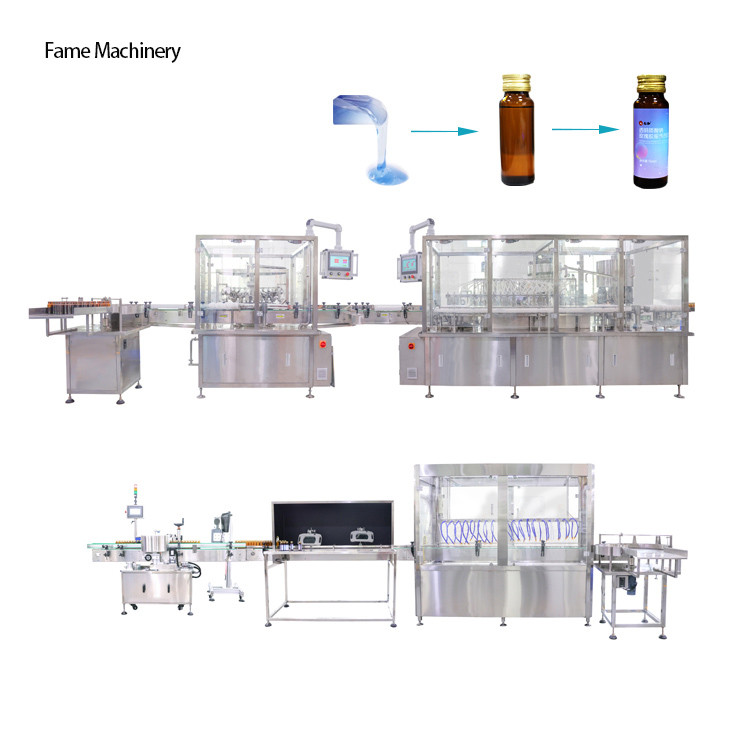
Filling machines are core pieces of equipment in packaging production lines, boasting distinct features centered around automation, high precision, high efficiency, and flexibility.
I. Core Performance Features
1. High Precision and High Stability
Features: Utilizing precision metering devices (such as peristaltic pumps, servo motors, load cells, flow meters, etc.), they ensure highly consistent filling volumes for every bottle/bag, with extremely low tolerances (reaching ±0.5% or higher).
Advantages: Ensures consistent product quality, complies with national measurement standards, and avoids material waste caused by underweighting or overfilling.
2. High Efficiency and Automation
Features: Extremely fast filling speeds, ranging from dozens to thousands of bottles per hour (depending on the number of workstations and product characteristics). Highly automated, the entire process from empty bottle loading, positioning, filling, capping/capping, to finished product delivery is automated.
Advantages: Significantly improves production efficiency, reduces labor costs and intensity, and is key to achieving large-scale production.
3. Wide Material Compatibility
Features: By replacing different filling heads and piping systems, the system can adapt to various material characteristics.
Liquids: Such as water, oil, alcohol, beverages, and daily necessities.
Pastes: Such as toothpaste, cosmetics, ointments, and ketchup.
Granulars/Powders: Such as snacks, grains, milk powder, and seasonings.
Specialty Materials: Specialized solutions are available for liquids with suspended matter, highly foaming liquids, and corrosive liquids.
4. Excellent Hygiene and Safety
Features:
Material: Material-contacting parts are typically made of stainless steel (such as 304 and 316L), which is corrosion-resistant, easy to clean, and complies with GMP requirements for food and pharmaceutical products.
Structure: The equipment design eliminates sanitary blind spots and facilitates disassembly and cleaning (CIP Cleaning-in-Place/SIP Sterilization-in-Place).
Protection: Excellent sealing prevents material leakage and external contamination.
Advantages: Ensures product hygiene and safety and extends equipment life, which is particularly crucial for the food, beverage, pharmaceutical, and daily chemical industries.
II. Structure and Design Features
1. Modular Design
Features: Modern filling machines often adopt a modular design, allowing for flexible addition or removal of functional modules based on production needs. For example, adding a capping machine, labeling machine, sealing machine, and coding machine can create a complete production line.
Advantages: Strong scalability, easy upgrades, and more flexible investment.
2. User-Friendly Operation
Features:
Human-Machine Interface (HMI): Equipped with a touch screen, parameter settings (such as filling volume and speed) are intuitive and easy.
Memory Function: Multiple recipes can be stored and recalled with a single click when changing products.
Automated Control: Utilizes a PLC (Programmable Logic Controller) system for stable operation and powerful self-diagnosis capabilities.
Advantages: Reduces operator skill requirements and reduces commissioning and production changeover time.
3. Diversified Filling Methods
A variety of filling principles are available based on the physical properties of different materials:
Atmospheric Pressure Filling: Suitable for common liquids with good flowability.
Pressure filling: Suitable for carbonated beverages (such as cola and beer), preventing gas from escaping.
Vacuum filling: Suitable for viscous liquids that foam easily; vacuuming can eliminate bubbles.
Weighing filling: Suitable for materials requiring extremely high precision or with large viscosity variations.
Peristaltic pump filling: Suitable for small doses, corrosive materials, or materials that are sensitive to shear forces.
III. Economic and Environmental Features
1. Cost Savings
Features: High-precision filling reduces material waste ("drip loss"); automation reduces labor costs; and high efficiency reduces energy consumption per unit of product.
2. Durability and Low Maintenance
Features: High-quality materials and precision machining make the equipment sturdy and durable. Modular design also facilitates maintenance and parts replacement.
3. Summary
In summary, the characteristics of modern filling machines can be summarized as follows:
For the product: High precision, high hygiene, and non-destructive filling.
For production: High efficiency, high automation, and high flexibility.
For the user: Easy operation, easy maintenance, and low cost.
It is these outstanding features that make filling machines an indispensable basic equipment for modern food, beverage, pharmaceutical, chemical, and daily chemical industries. When choosing a filling machine, you need to match the most suitable model based on your specific materials, production requirements, budget, and hygiene standards.