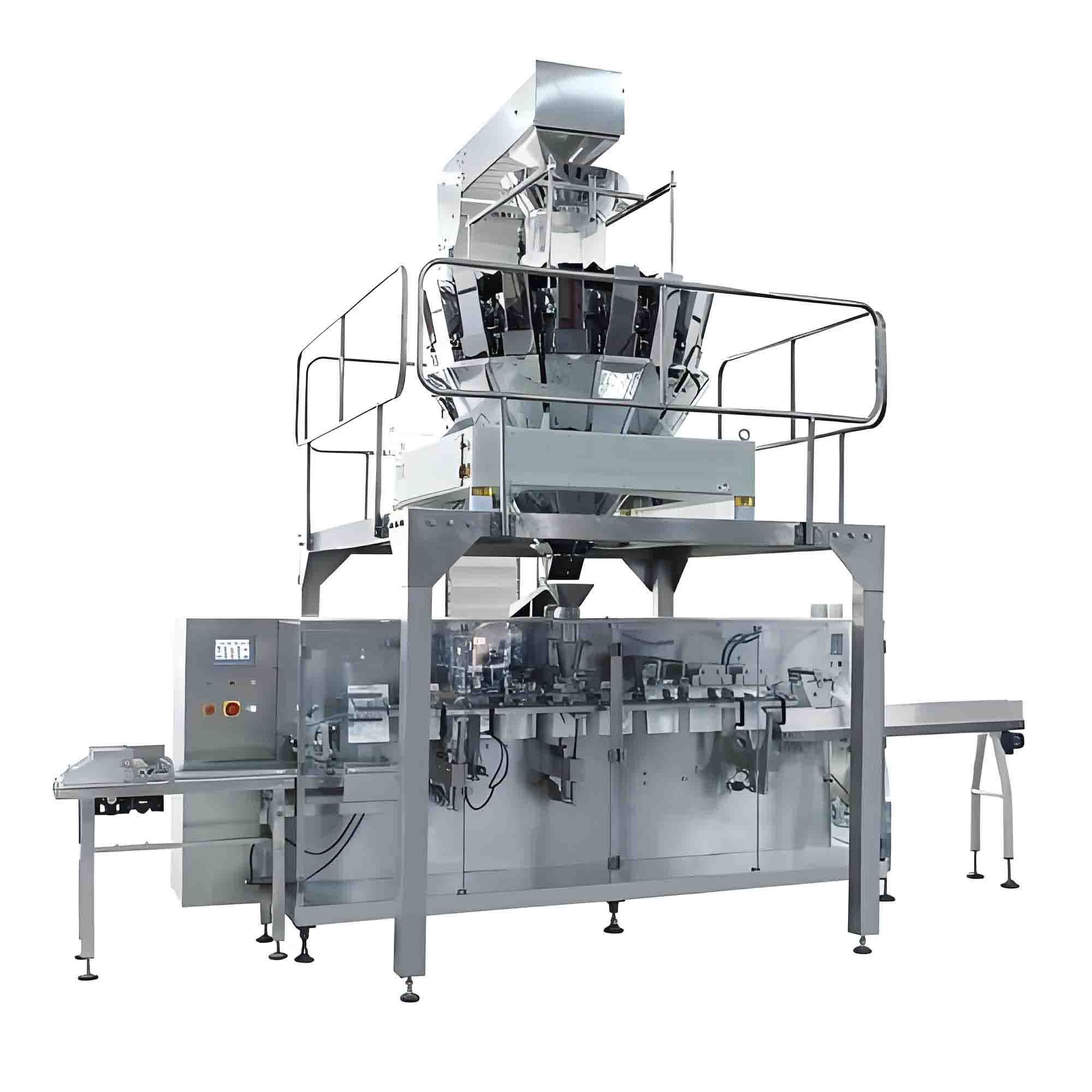
What are the features of the bag packaging machine?
- Share
- Issue Time
- Nov 24,2025
Summary
A feeder bag packaging machine is a highly automated and widely used packaging machine. Its core feature is that it uses pre-made bags, which are then packaged through a series of robotic operations,
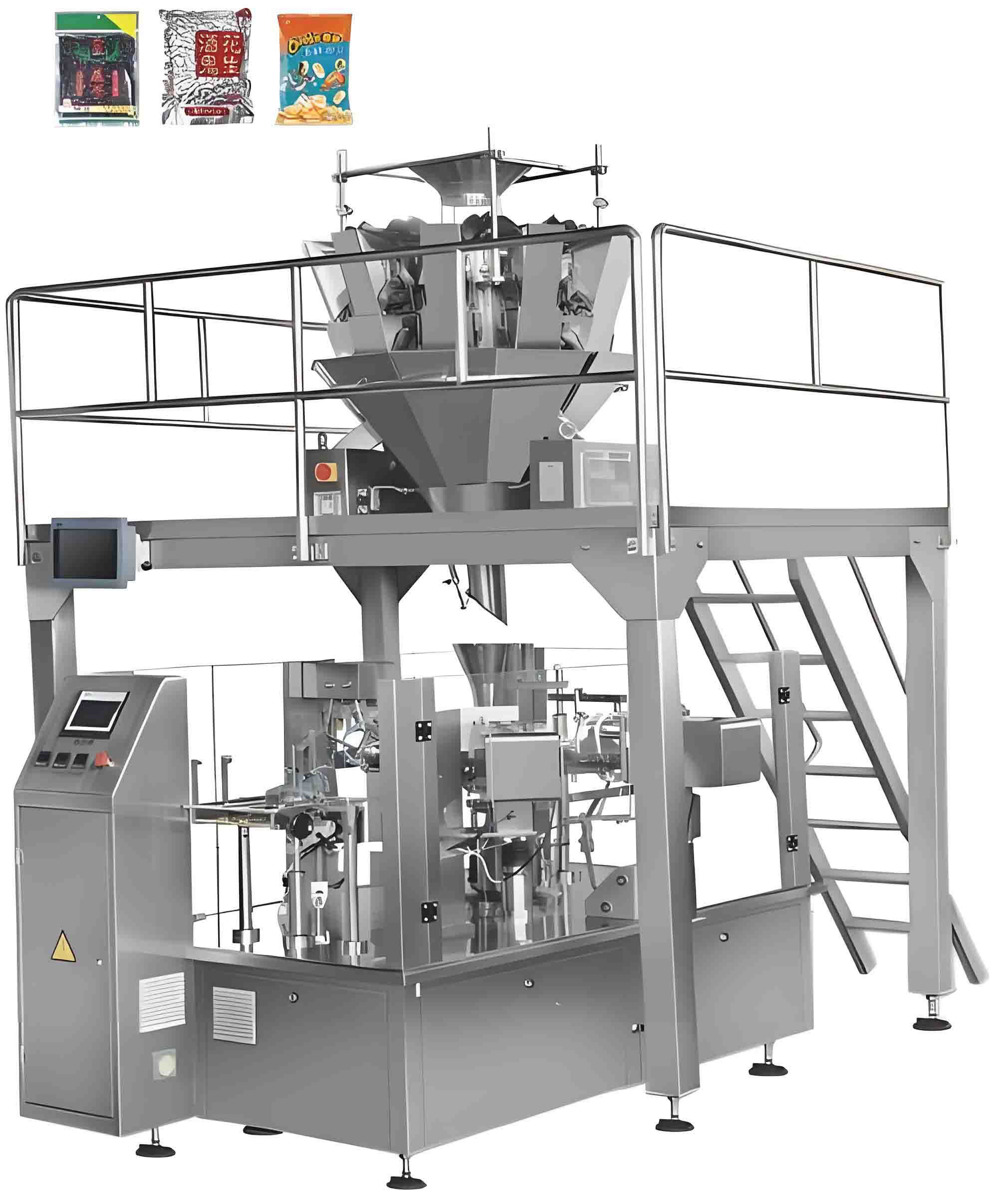
A feeder bag packaging machine is a highly automated and widely used packaging machine. Its core feature is that it uses pre-made bags, which are then packaged through a series of robotic operations, including bag removal, bag opening, filling, and sealing.
The following are the main features of a feeder bag packaging machine, which can be divided into advantages and limitations:
Main Advantages and Features
1. Various packaging formats and high aesthetic appeal
It can accommodate a variety of bag types, including three-side seal, four-side seal, back-seal (pillow-type bags), gusseted bags, stand-up pouches, zipper bags, and tote bags.
Because it uses pre-made bags, the bags can be beautifully pre-printed with centered designs, resulting in a high-end appearance. This makes it ideal for products requiring a high-quality packaging, such as gifts, high-end foods, and cosmetics.
2. High Speed and High Efficiency
Using robotics in parallel, bag removal, bag opening, filling, and sealing are performed simultaneously, resulting in a fast cycle time.
Packing speeds typically reach 40-120 bags per minute (depending on the material and bag type), far exceeding those of manual packaging and many other types of packaging machines.
3. High degree of automation, labor savings
The entire process from bag removal to finished product delivery is fully automated, requiring only one or two employees to load and inspect the bags, significantly reducing labor intensity and costs.
Easily integrated into automated production lines, it can be linked with upstream batching machines and downstream cartoning and case packing machines.
4. Wide filling range and adaptability
It can package a wide range of products, including:
Solids: nuts, potato chips, candy, biscuits, frozen foods, pet food, etc.
Liquids and sauces: soy sauce, vinegar, cooking oil, laundry detergent, honey, jam, etc. (requires a liquid filling system).
Granulars and powders: seasonings, milk powder, coffee, seeds, pharmaceuticals, etc.
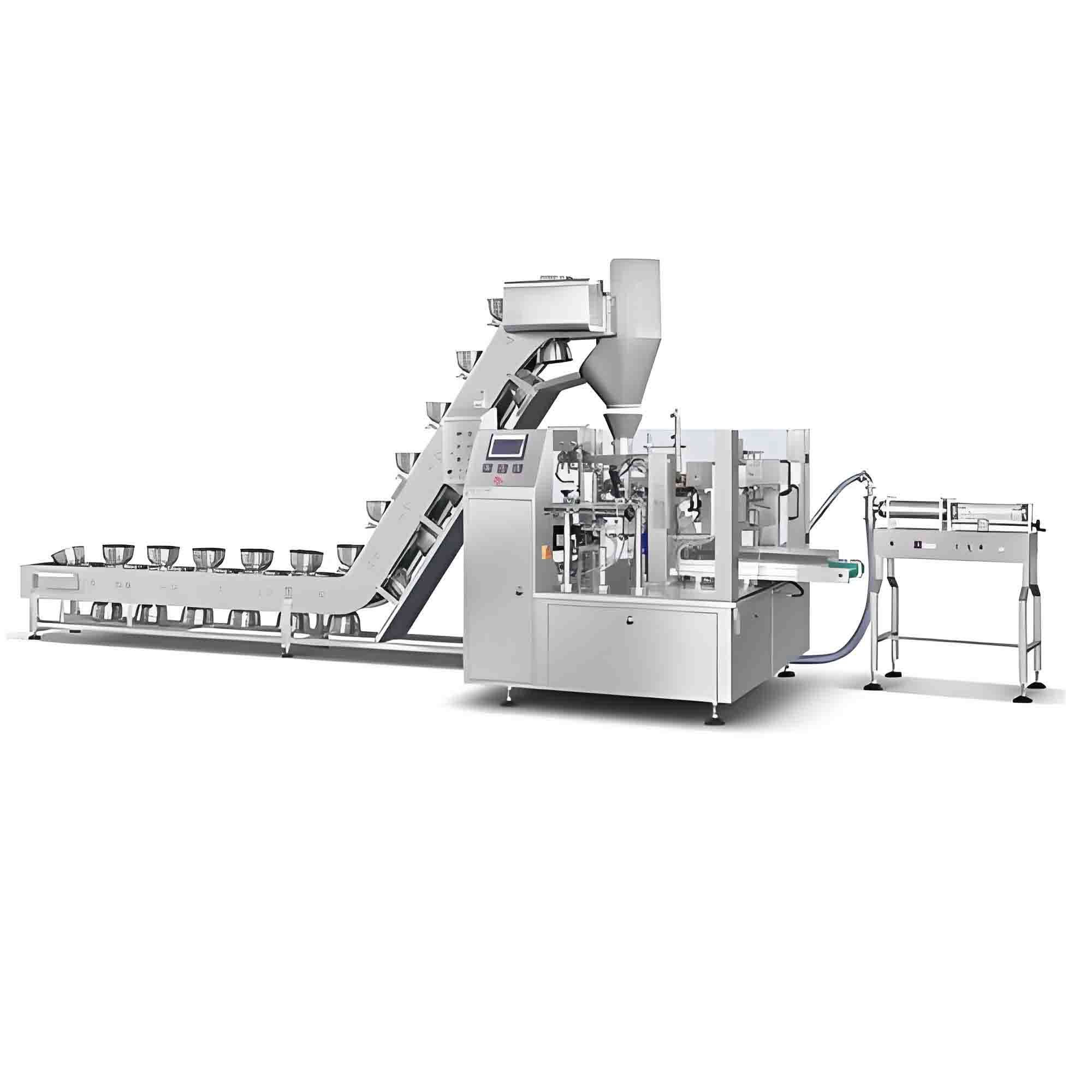
By adapting to different feeding devices (such as screw scales, measuring cups, and liquid pumps), precise metering of various material forms is possible.
5. Excellent sealing quality and strong airtightness
Pre-made bags are used, resulting in clean and smooth seals, typically three or four sides.
The seal is secure and excellent, effectively preventing product leakage and moisture, extending shelf life. It's particularly suitable for products requiring vacuum or nitrogen-filled packaging for freshness preservation.
6. Relatively easy production changeovers
Changing to a different bag size typically requires only replacing the bag gripper and mold, making adjustments relatively simple. This makes it suitable for flexible production of a wide variety of products and small batches.
Limitations
High equipment investment costs
Due to their technical complexity and degree of automation, the initial purchase cost of a bag-feeding packaging machine is typically higher than that of a vertical packaging machine (a bag-making packaging machine).
High bag requirements
Pre-made bags must be used, resulting in relatively high bag costs.
Quality requirements for bag quality (such as cut smoothness, pattern placement, and material uniformity) are also high. Failure to do so can easily lead to bag jamming and bag opening failures.
Relatively large footprint
Due to the need for a bag storage tray and space for the robot, the overall footprint is generally larger than that of a simple vertical packaging machine.
Summary and Application Scenarios
In summary, the core feature of a feeder bag packaging machine is its high-speed, high-quality, fully automated, and versatile packaging using pre-made bags.
It is particularly suitable for the following applications:
Industries requiring high packaging aesthetics: such as gifts, tea, high-end snacks, cosmetics, and electronics.
Industries requiring complex bag shapes: such as stand-up pouches, zippered food bags, and tote bags.
Industries with high-value products or those requiring freshness: such as frozen foods, seafood, meat, coffee, and pet food (which often require vacuum or nitrogen filling).
Modern factories with high production volumes that seek to reduce labor reliance.
If you value packaging aesthetics and variety and have a sufficient budget, a feeder bag packaging machine is a better choice than a vertical packaging machine. If your product offerings are limited and cost and space savings are a priority, a vertical packaging machine may be more cost-effective.