What are the characteristics of pillow packaging machine?
- Share
- Issue Time
- Nov 2,2025
Summary
Flow wrapping machine/Pillow packaging machines are a very common and highly efficient automated packaging equipment, named for the "pillow" shape of the final package.
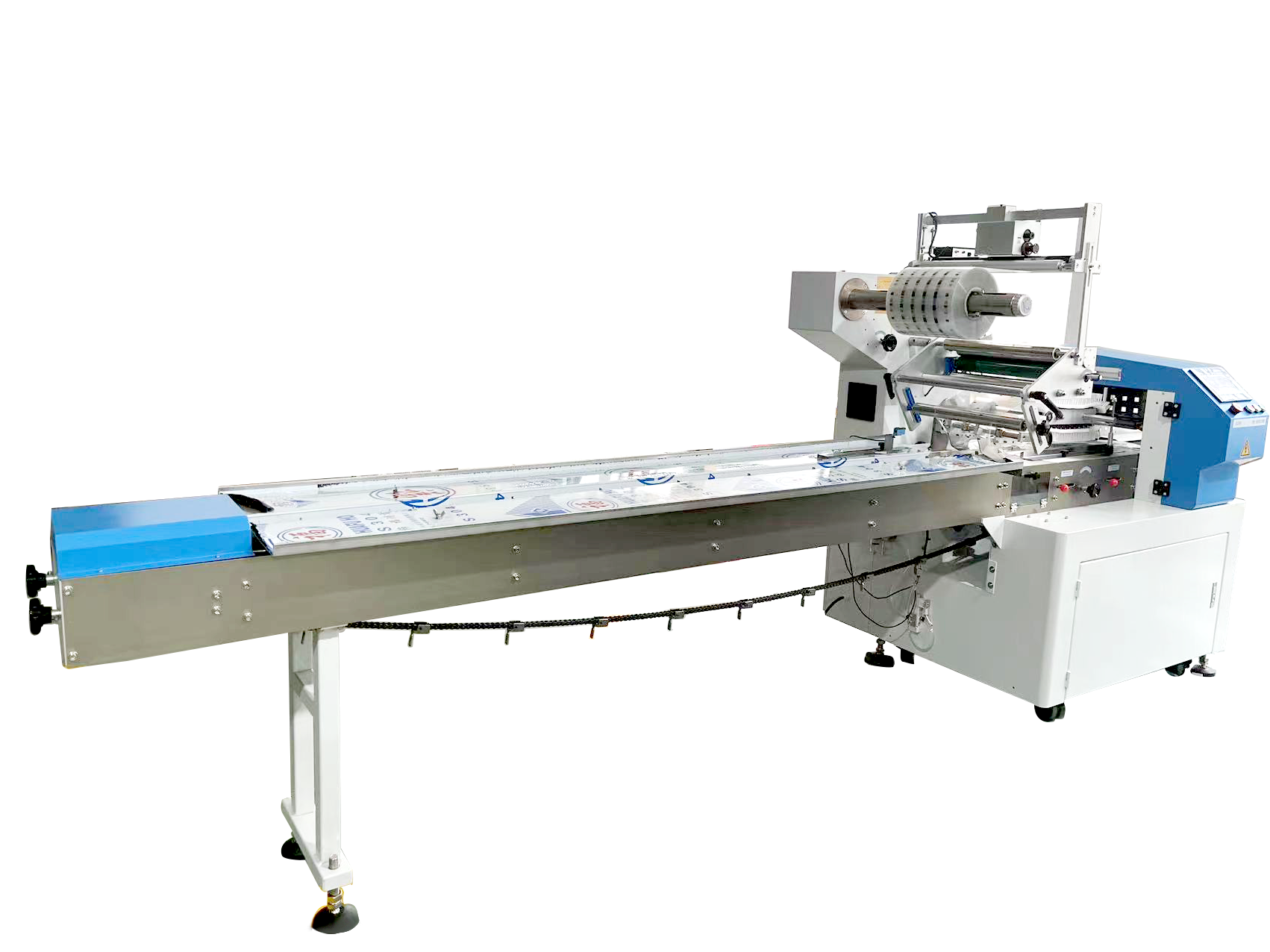
I. Core Working Principle and Packaging Features
Packaging Form: The finished package is sealed on three or four sides, resembling a pillow, with a regular and beautiful appearance.
Continuous Packaging: Using roll-type packaging film, it can achieve uninterrupted continuous packaging and extremely high production efficiency.
Three-side/Four-side Sealing: The most common method is three-side sealing (rear seal, front seal, and back longitudinal seal). Some models add a sealing step to achieve four-side sealing without a back seal, giving the package a more bag-like appearance and enhancing the product's quality.
II. Performance and Efficiency Features
High production efficiency: This is one of the most prominent advantages of pillow packaging machines. It operates at exceptionally high speeds, reaching dozens to thousands of bags per minute, depending on the product, making it ideal for large-scale industrial production.
High degree of automation: From material conveying, bag making, filling, sealing, cutting, to finished product delivery, everything is automated, significantly reducing manual operations, labor intensity, and labor costs.
Wide packaging range and adaptability:
Product types: Suitable for packaging solid, fixed-shape items such as biscuits, bread, candy, medicine, soap, hardware, and disposable tableware.
Product form: Suitable for packaging single items or multiple items (e.g., combining several biscuit bags into a long, pillow-shaped bag).
Easy production changeover: By replacing different material conveyor chains (e.g., filling machines, pushers, etc.) and molds, a single machine can package products of various shapes and sizes. Modern models often have a memory function, storing multiple sets of parameters for easy recall during production changes.
III. Technical and Control Features
Precise Positioning System:
Photoelectric Tracking: A photoelectric eye detects the color mark on the packaging film, ensuring the integrity of the pattern and accurate sealing and cutting position of each bag.
Servo Control System: Modern high-end pillow packaging machines are commonly driven by servo motors, which offer higher control precision, smoother operation, more accurate positioning, and easier commissioning.
Stable Temperature Control System: The sealing process utilizes heat sealing with a precise temperature control system, ensuring a secure and aesthetically pleasing seal and adapting to packaging films of various materials (such as CPP, OPP, and PET/PE composite films).
User-Friendly Operation: Typically equipped with a touchscreen human-machine interface, parameter setting, operation, monitoring, and fault diagnosis are intuitive and convenient.
IV. Economical and Quality Features
Saving Packaging Materials: Using roll film reduces material costs and reduces storage space compared to pre-made bags.
Ensuring Packaging Quality: Stable mechanical operation, controllable sealing pressure, and temperature ensure consistent sealing and appearance for each bag, effectively extending the shelf life of the product.
High Hygiene Standards: The equipment is primarily constructed of stainless steel and other materials that meet food and pharmaceutical hygiene requirements, making it easy to clean and compliant with GMP and other regulations.
Summary
In summary, the core features of pillow packaging machines can be summarized as high efficiency, high automation, high adaptability, and stable and reliable packaging quality. They perfectly meet the demands of modern industrial production for speed, cost, and quality, making them an indispensable piece of key equipment in assembly line production.
Of course, they also have limitations, primarily being unsuitable for packaging materials with fluid shapes such as powders, liquids, and pastes, which are typically packaged using vertical packaging machines.