What Is an Auger Filling Machine and How Does It Work?
- Share
- Issue Time
- Aug 22,2026
Summary
Auger filling machines are widely used for accurately dispensing powders and fine granular materials into bags, pouches, bottles, and other containers. This article explains how auger filling technology works, its main components and advantages, common industry applications, maintenance requirements, and key factors to consider when choosing an auger filler for efficient and reliable automated packaging.
Understanding Auger Filling Technology
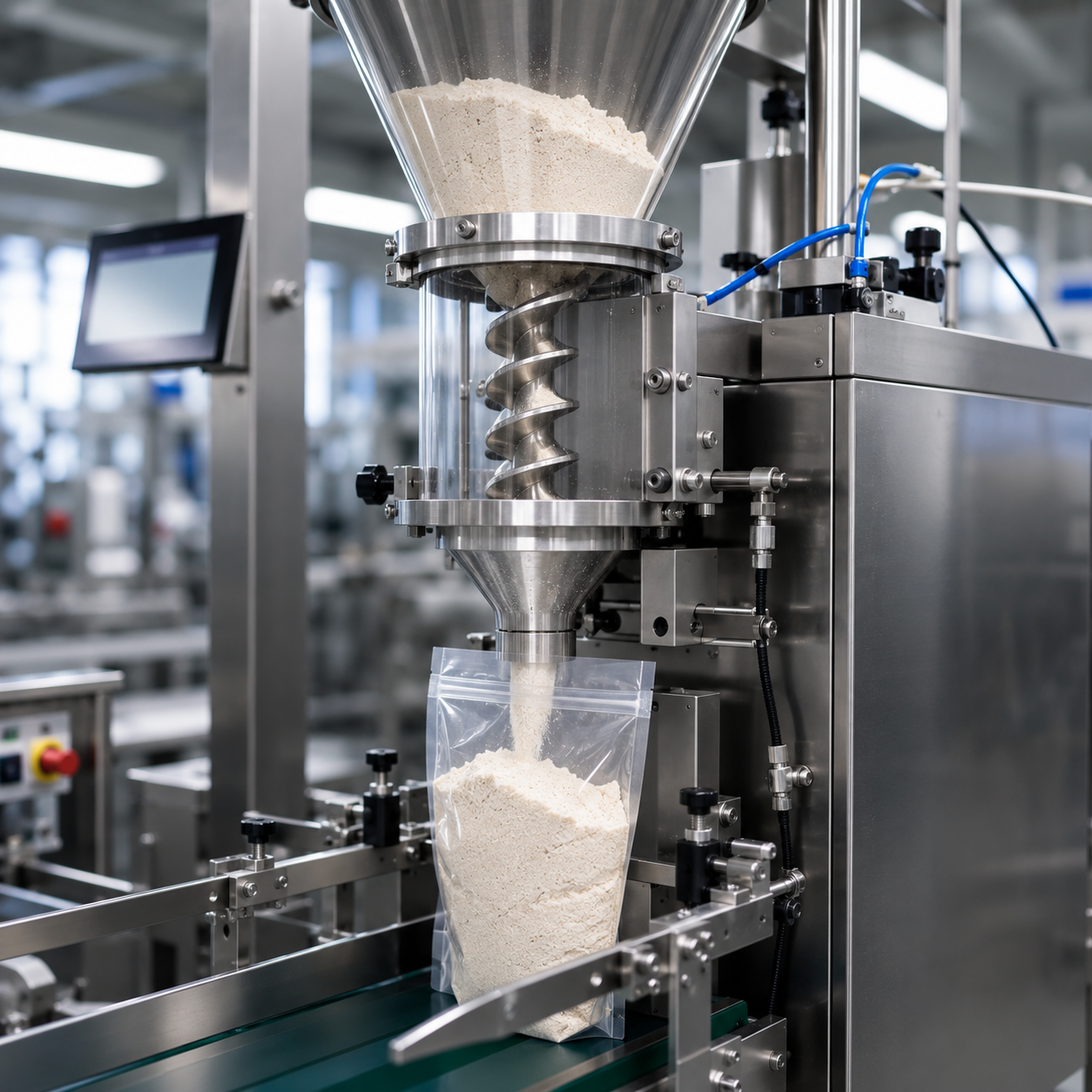
An auger filling machine is a type of dosing equipment designed for accurately filling powders, fine granules, and other dry materials into bags, pouches, bottles, jars, or other containers. The system uses a rotating screw, commonly called an auger, to move a controlled amount of product from the hopper to the packaging container.
Auger filling technology is widely used in modern packaging lines because it can handle products with different flow characteristics. Materials such as flour, milk powder, coffee powder, protein powder, spices, pharmaceutical powders, and chemical products can all require precise and consistent dosing. By adjusting the auger rotation, filling parameters, and machine settings, manufacturers can match the equipment to different product requirements and production capacities.
How Does an Auger Filling Machine Work?
The basic operation of an auger filling system is based on controlled screw rotation. Product is first loaded into a hopper positioned above the filling mechanism. The material then enters the auger chamber, where the rotating screw transports it toward the filling outlet.
The Main Filling Process Includes:
Product feeding: Powder or granular material is supplied to the hopper.
Material dosing: The auger screw rotates according to the programmed filling requirement.
Controlled discharge: A measured quantity of product moves through the filling tube.
Package filling: The material is released into a pouch, bag, bottle, jar, or other container.
The amount of product dispensed can be controlled by factors such as auger size, rotation speed, number of screw revolutions, and product characteristics. This makes auger fillers a flexible option for many powder packaging applications.
Main Benefits of Auger Filling Equipment
Accurate and Consistent Filling
Auger fillers provide controlled product dosing, helping manufacturers achieve more uniform fill weights and reduce variation between packages. This is particularly important for products that require reliable portion control.
Suitable for Different Powder Products
An auger filling machine can process many types of powders and fine granular materials. Depending on the machine configuration, it can be adapted for free-flowing, non-free-flowing, light, dense, or blended products.
Reduced Product Loss
Precise dosing helps minimize unnecessary overfilling and product waste. For businesses handling high-value ingredients or large production volumes, improved filling control can contribute to lower material costs.
Easy Integration with Packaging Lines
Auger filling systems can be combined with VFFS machines, pouch packaging machines, bottle filling lines, multi-lane packaging equipment, and other automated systems. This makes them suitable for both standalone filling applications and complete production lines.
Improved Production Efficiency
Automated auger fillers reduce the need for manual measuring and filling. With the right configuration, manufacturers can increase production speed while maintaining more consistent packaging results.
Common Industries Using Auger Filling Machines
Auger filling technology is used across many industries that package dry powders and fine particles.
Food and Beverage
Common applications include flour, coffee powder, milk powder, cocoa, spices, seasoning blends, protein powder, and baking ingredients.
Pharmaceutical and Nutritional Products
Auger fillers are often used for powdered medicines, health supplements, nutritional formulas, and other products requiring controlled dosing.
Chemical Products
Powdered chemicals, detergents, additives, pigments, and similar industrial materials can be packaged using suitable auger filling equipment.
Cosmetics and Personal Care
Products such as face powder, dry cosmetic ingredients, and powdered personal care products can benefit from accurate auger dosing systems.
Agriculture and Animal Nutrition
Auger filling machines can also be used for powdered feed additives, nutritional supplements, fertilizers, and other dry agricultural products.
Maintenance Tips for Auger Filling Machines
Regular maintenance is important for maintaining filling accuracy and stable machine performance. Powder residue should be cleaned from the hopper, auger, filling tube, and surrounding components to prevent buildup and cross-contamination.
Operators should also inspect the auger screw, motor, sensors, and moving parts regularly. Worn components can affect dosing precision and machine reliability. Periodic calibration helps ensure that actual filling results remain within the required range.
Recommended Maintenance Practices:
● Clean product-contact parts regularly.
● Check the auger and filling tube for wear or residue buildup.
● Calibrate filling settings based on product requirements.
● Inspect motors, sensors, and mechanical connections.
● Use compatible spare parts when replacements are required.
● Train operators to identify abnormal machine performance early.
Choosing the Right Auger Filling Solution
When selecting an auger filling machine, manufacturers should consider product characteristics, required filling weight, packaging format, target production speed, and accuracy requirements. The flowability, density, and particle size of the product can all influence the final machine configuration.
A properly selected auger filling system can provide accurate dosing, efficient production, and reliable integration with automated packaging equipment. For manufacturers processing powders or fine granular materials, auger filling technology remains an important solution for improving packaging consistency and production efficiency.