The principle, advantages and application prospects of blister packaging machines
- Share
- Issue Time
- Nov 23,2025
Summary
In recent years, with the continuous development of my country's pharmaceutical industry and the increasing variety of drugs, drug dosage forms have become more diverse,
In recent years, with the continuous development of my country's pharmaceutical industry and the increasing variety of drugs, drug dosage forms have become more diverse, and the quality of pharmaceutical packaging materials and the technology of medicine box processing and manufacturing have also made significant progress. Based on this, major pharmaceutical manufacturers are constantly increasing their requirements for drug packaging, especially for blister packaging machines. Various multi-functional fully automatic blister packaging machines are gradually being applied in pharmaceutical companies.
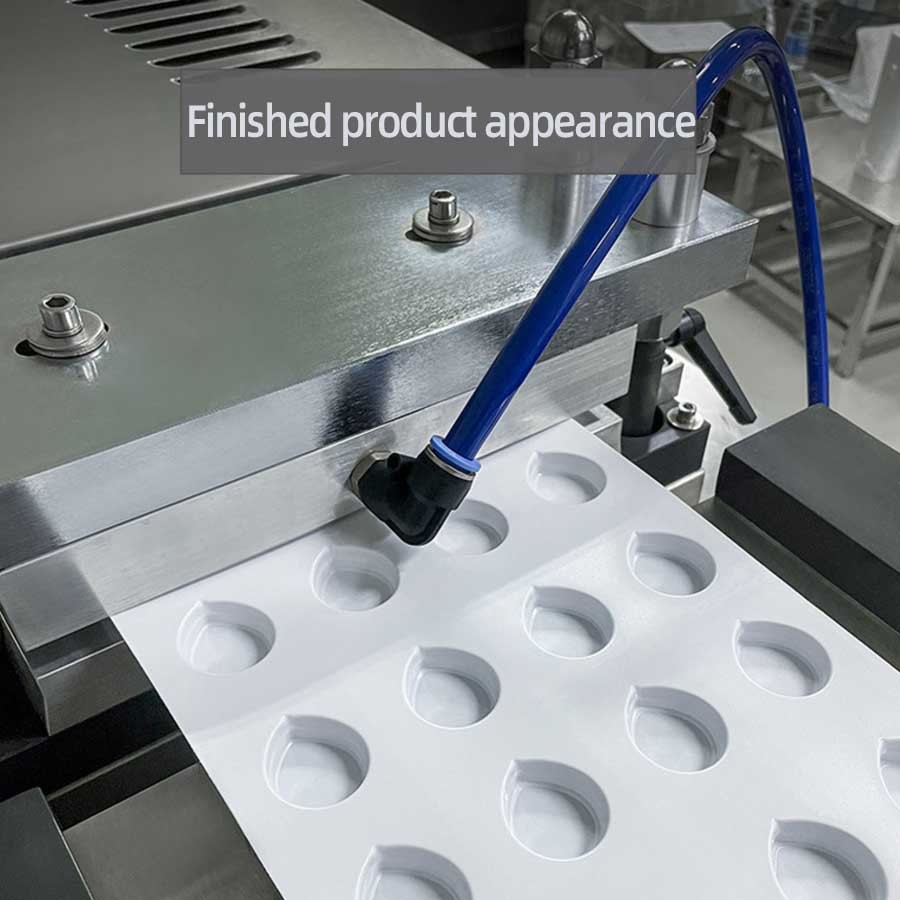
A blister packaging machine is a device that uses transparent plastic film or sheets to form blister packs, and then seals the product between the blister pack and the base plate using methods such as heat sealing and bonding. It is suitable for blister-type aluminum (PTP)/plastic (PVC) composite sealed packaging of tablets, capsules, medical devices, health products, and similar materials. The principle of blister forming is that PVC rigid sheets are heated and then passed through a mold and formed into blister packs of the required shape and size using compressed air.
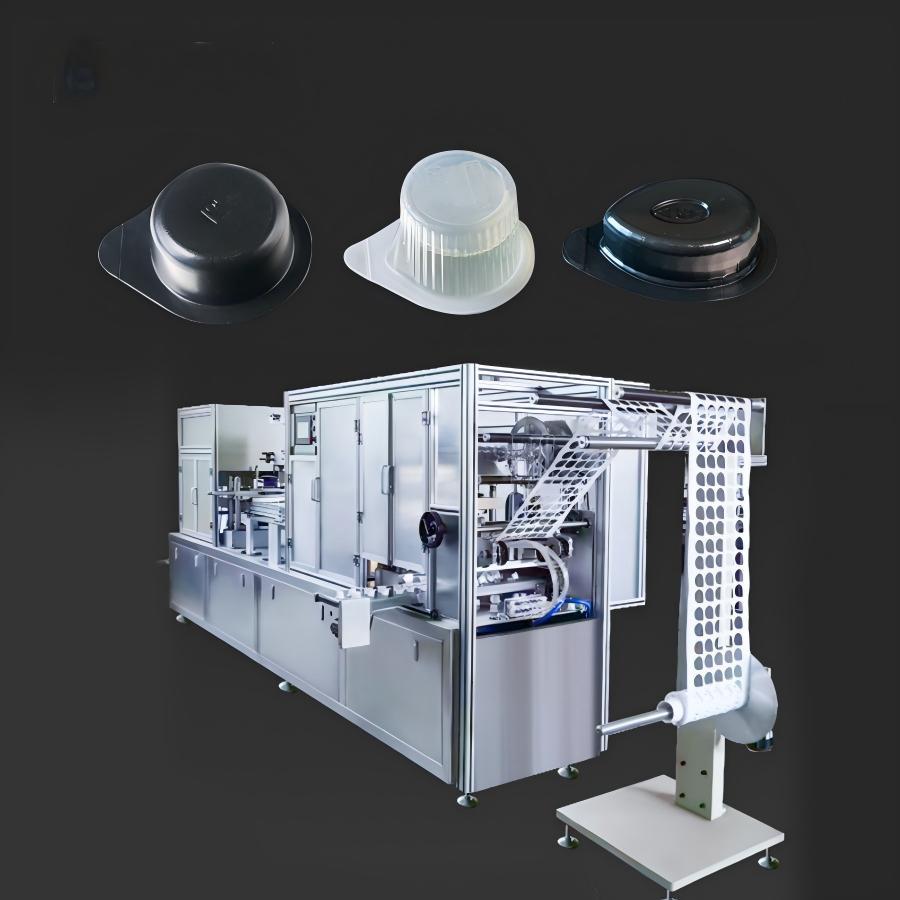
The specific forming process is as follows: The blister packaging machine heats and blows PVC bubbles, adds medicine, heat-seals, and stamps batch numbers. Four, five, or six blister packs are cut and arranged in a staggered pattern. A robotic arm divider places them into two conveyor belts, which then feed into the blister pack hopper of the cartoning machine. A servo motor in the hopper counts the blister packs and directs them to the cartoning machine's blister pack section. Combined with folded instruction manuals, the blister packs are pushed into cartons, stamped with batch numbers, and locked. The cartons are then fed into the strapping machine's hopper, stacked, strapped, and fed into the case packing machine's hopper for further stacking, cartoning, and sealing.
All of these packaging forming actions are completed by a PLC and motion control system. The system incorporates multiple detection methods, including automatic rejection for missing medicine, medicine stains or defects, blister pack defects, missing instruction manuals, and automatic alarm recording for various faults. This high-quality blister packaging machine boasts excellent heat-sealing performance, stability, and accurate synchronization. Furthermore, the coordinated operation of various equipment overcomes the disadvantages of manual handling and low processing efficiency in intermediate stages, improving the automation level and processing efficiency of production, making it highly favored by users.
To improve the performance of blister packaging machines, many companies have implemented strict management from structural design and manufacturing to inspection. Starting with structural design, they continuously improve and accumulate design and production experience to enhance the reliability and stability of blister packaging machines in production. For example, Yuzhuang Technology's blister packaging machine integrates blister forming, material feeding, and die-cutting output, suitable for automatic tray feeding of products such as vials, injection bottles, and oral liquid bottles in the pharmaceutical industry.
Overall, blister packaging machines bring more value to enterprises, improving production efficiency while significantly reducing costs. With the rapid development of industries such as pharmaceuticals, blister packaging machines will usher in even broader development prospects in the future. However, the market is constantly changing, and companies need to grasp market trends and continuously upgrade their equipment.