Stainless Steel Packaging Machines: Improving Hygiene, Durability and Production Efficiency
- Share
- Issue Time
- Oct 9,2026
Summary
Stainless steel packaging machines help food manufacturers improve hygiene, corrosion resistance, durability, and production stability. With easy-to-clean surfaces and reliable performance, the right packaging equipment can reduce maintenance costs, support food safety, and improve long-term production efficiency.
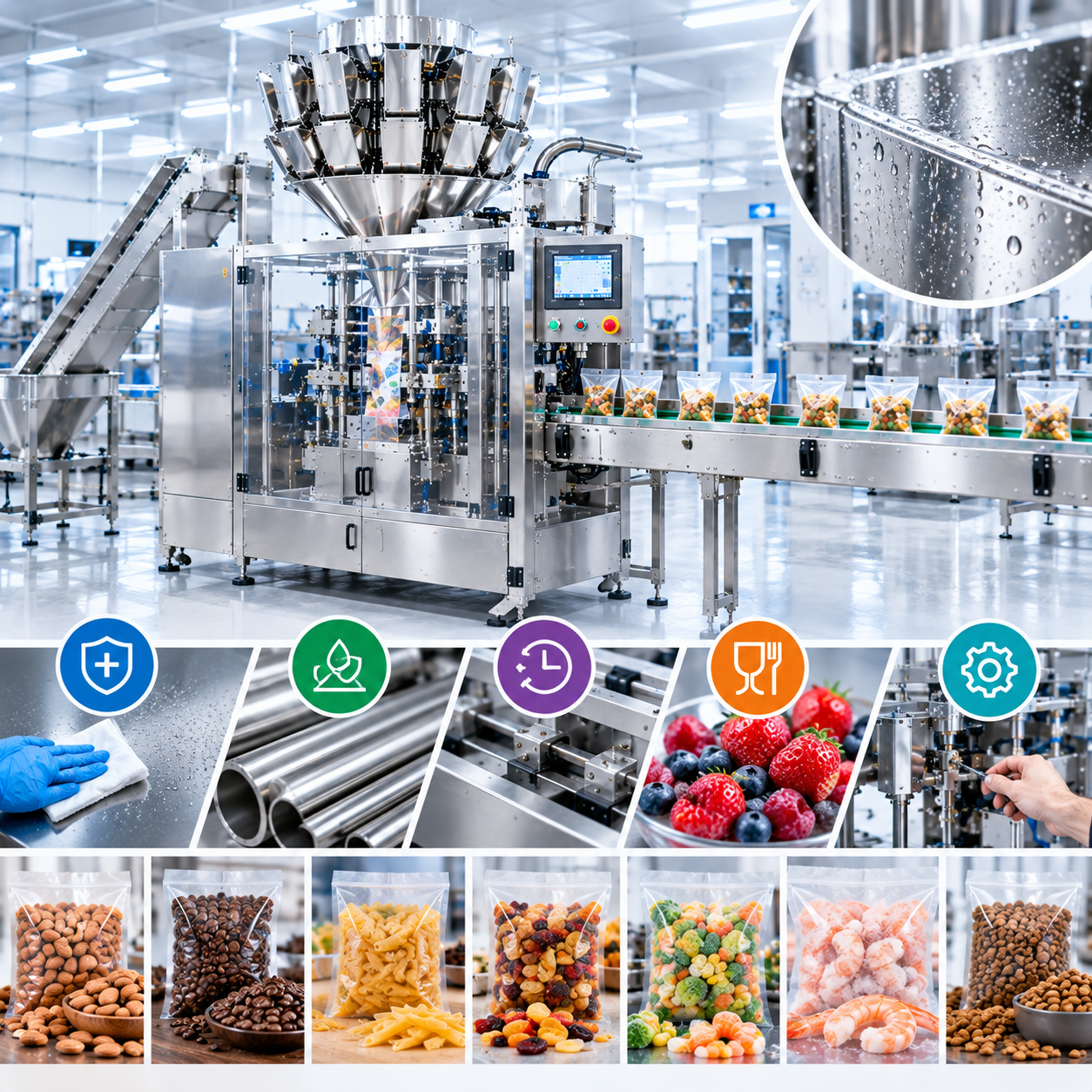
In modern food packaging, machine quality is closely connected to product safety, production stability, and long-term operating costs. For products such as nuts, coffee, pasta, spices, confectionery, frozen foods, and dry pet food, choosing packaging equipment with the right material and hygienic design is essential.
Stainless steel packaging machines provide a reliable solution for manufacturers looking to improve cleanliness, resist harsh production conditions, and maintain stable performance over time.
Why Choose Stainless Steel Packaging Equipment?
Packaging machines often operate in environments exposed to moisture, food residues, temperature changes, and frequent cleaning. Stainless steel construction offers several advantages for demanding production applications.
Key benefits include:
Easy cleaning: Smooth surfaces help reduce product residue and simplify daily sanitation.
Corrosion resistance: Stainless steel performs reliably in humid environments and during regular cleaning.
Long service life: Durable construction helps reduce wear and frequent component replacement.
Food-safe design: Suitable stainless steel contact parts support hygienic production requirements.
Lower maintenance needs: Easy-to-clean structures can shorten cleaning and maintenance time.
Better Hygiene for Food Packaging
For food manufacturers, hygiene is a major consideration when selecting packaging equipment. Product-contact surfaces should be easy to access, clean, and maintain.
A well-designed stainless steel packaging machine helps reduce residue accumulation and cross-contamination risks. This is especially important for facilities that frequently change between different products or require regular machine cleaning.
From coffee and nuts to frozen vegetables and confectionery, hygienic equipment helps maintain consistent packaging quality throughout production.
Reliable Performance in Demanding Environments
Packaging lines may operate under challenging conditions, including high humidity, cold temperatures, dust, and frequent washdown procedures. Ordinary materials may deteriorate more quickly under these conditions.
Stainless steel construction provides strong resistance to corrosion and environmental wear, helping packaging equipment maintain stable performance. This can reduce unexpected downtime and support continuous production.
Suitable for Multiple Food Products
Stainless steel packaging machines can be configured for a wide range of applications, including:
Nuts and seeds
Coffee and tea
Rice, beans, and pulses
Pasta
Flour and spices
Snacks and confectionery
Frozen foods
Freeze-dried products
Dry pet food
The machine structure and filling system can be selected according to the product characteristics, package format, target weight, and required production capacity.
How to Choose the Right Packaging Machine
Material selection is only one part of choosing suitable packaging equipment. B2B manufacturers should also evaluate:
Product characteristics and flowability
Required filling accuracy
Packaging size and material
Target production speed
Cleaning and maintenance requirements
Available factory space
Future production expansion
A properly configured machine can improve production consistency while reducing material waste, labor requirements, and long-term operating costs.
Build a More Reliable Packaging Line
Stainless steel packaging technology offers manufacturers a practical combination of hygiene, durability, and production reliability. For food processing companies, selecting equipment designed around their specific products and operating conditions can provide greater efficiency and a longer equipment service life.
The right packaging machine is not simply a production tool—it is a long-term investment in product quality, operational stability, and business growth.