Safe Packing Methods for Industrial Packaging Machines During Transportation
- Share
- Issue Time
- Jul 28,2026
Summary
Proper packing is essential for protecting industrial packaging machines during transportation, storage, and installation. This article explains key packing methods such as structural protection, moisture prevention, vibration reduction, and load securing. It also covers suitable packing materials, international shipping standards, handling procedures, and export documentation to help manufacturers reduce transit damage, improve delivery safety, and ensure machines arrive in excellent condition.
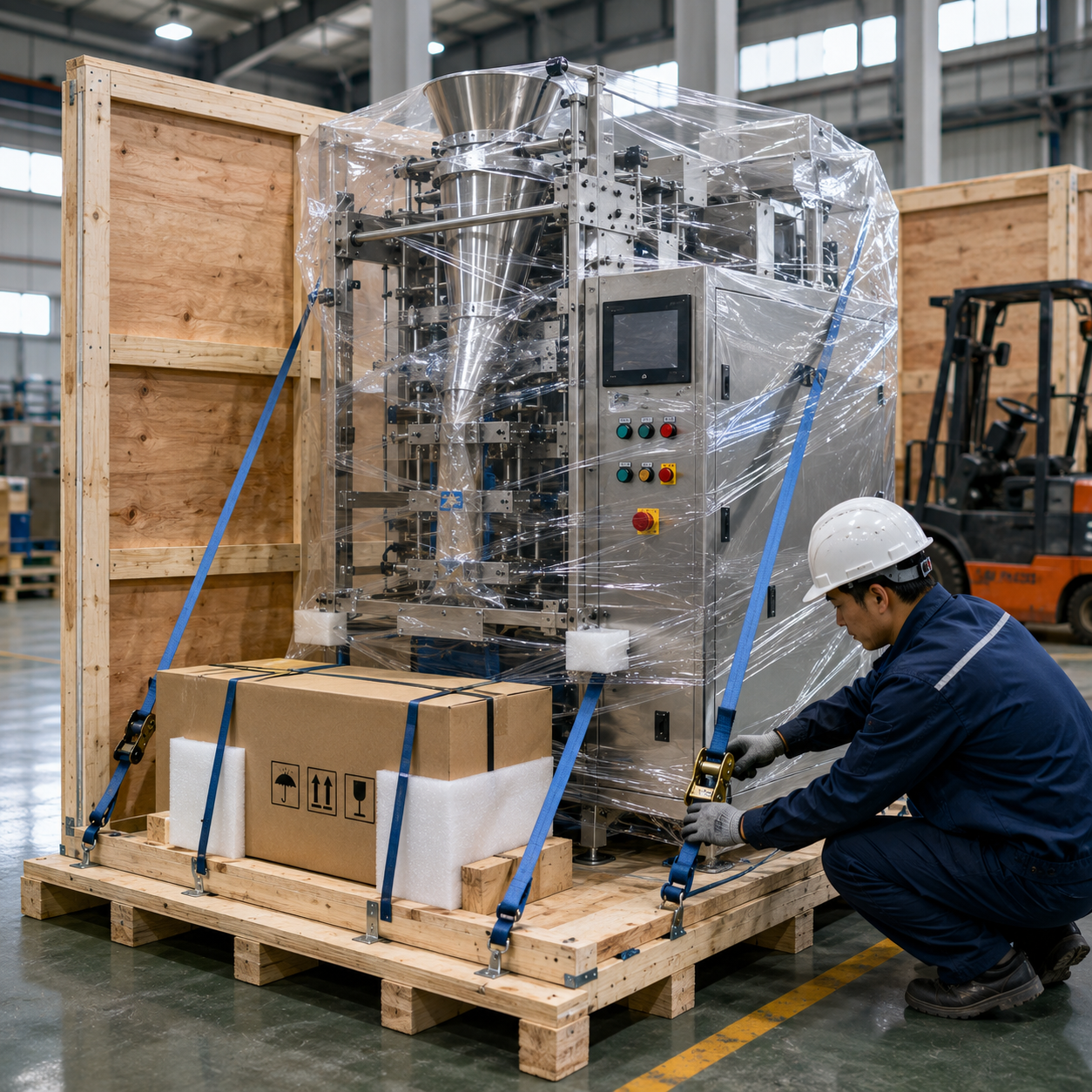
Proper transportation packaging is essential for protecting an industrial packaging machine from damage during shipping, storage, and installation. Large packaging systems contain precision components, electrical parts, and mechanical assemblies that can be affected by vibration, moisture, impact, and improper handling. A well-designed packing solution helps manufacturers reduce transportation risks, avoid costly repairs, and ensure machines arrive ready for operation.
Why Correct Packing Is Important for Industrial Packaging Machines
Mechanical Protection During Shipping
Heavy-duty wooden crates, steel frames, and reinforced supports help protect the structure of an industrial packaging machine during loading, unloading, and long-distance transportation. Proper protection prevents frame distortion, component displacement, and mechanical damage.
Protection Against Moisture and Corrosion
Industrial equipment may be exposed to humid environments during ocean or warehouse transport. Moisture barriers, rust-prevention coatings, desiccants, and sealed wrapping materials help protect metal surfaces and electrical components from corrosion and condensation.
Stable Weight Distribution
Correct weight balancing is critical when transporting heavy machinery. Evenly distributing the load reduces stress on the machine frame, prevents shifting during transit, and improves handling safety during lifting and transportation.
Recommended Materials for Packing Industrial Packaging Machines
Reliable packing materials play a major role in transportation safety. Commonly used materials include:
● Reinforced wooden crates
● Steel bases or export skids
● Heavy-duty lifting straps
● Protective foam and cushioning pads
● Stretch film and shrink wrapping
● Anti-rust packaging materials
● Shock-absorbing rubber supports
Selecting suitable materials according to machine size, weight, and shipping method helps minimize transportation risks.
Effective Packing Methods That Reduce Transit Damage
Internal Fixing and Bracing
Critical components should be securely fixed inside the crate to prevent movement. Internal bracing systems keep the industrial packaging machine stable during vibration and impact.
Vibration and Shock Protection
Foam inserts, rubber isolators, and cushioning materials absorb shocks generated during road, rail, sea, or air transportation, helping protect sensitive mechanical and electrical parts.
Secure Load Restraint
Machines should be firmly secured to pallets or steel bases using straps, bolts, or clamps. Proper restraint prevents sliding, tilting, or overturning during transport.
Compliance and Safety Requirements for Export Packaging
International Packaging Standards
Export packaging should comply with relevant international standards and customer requirements. Using approved packaging materials and documented packing procedures helps ensure safe and legally compliant shipment.
Trained Packing Personnel
Packing and loading operations should be performed by trained personnel familiar with lifting points, machine weight distribution, and transportation safety procedures. Proper handling reduces the risk of accidents and equipment damage.
Shipping Labels and Documentation
Clear handling labels such as “Fragile,” “Keep Dry,” “This Side Up,” and “Center of Gravity” help logistics providers transport equipment correctly. Accurate packing lists, commercial invoices, and export documents also support smooth customs clearance.
Best Practices for Long-Distance Transportation
For international shipments, manufacturers should conduct a final inspection before dispatch, verify crate integrity, photograph the packed machine for records, and confirm that all accessories and spare parts are properly secured. These measures improve traceability and help resolve transportation claims if necessary.
Conclusion
Safe transportation packaging is a critical part of delivering an industrial packaging machine successfully. By combining strong structural protection, moisture control, vibration reduction, proper load securing, and compliance with international shipping requirements, manufacturers can significantly reduce transportation risks and ensure equipment reaches customers in excellent condition. Effective packing practices not only protect machinery but also improve customer satisfaction and support reliable global delivery operations.