Packaging Machine Maintenance: Best Practices for Longer Service Life and Stable Performance
- Share
- Issue Time
- Aug 13,2026
Summary
Regular packaging machine maintenance is essential for maximizing equipment lifespan, maintaining stable production, and reducing unexpected downtime. This article explains preventive maintenance practices, cleaning procedures, lubrication checks, spare parts management, performance monitoring, operator training, and professional service support.
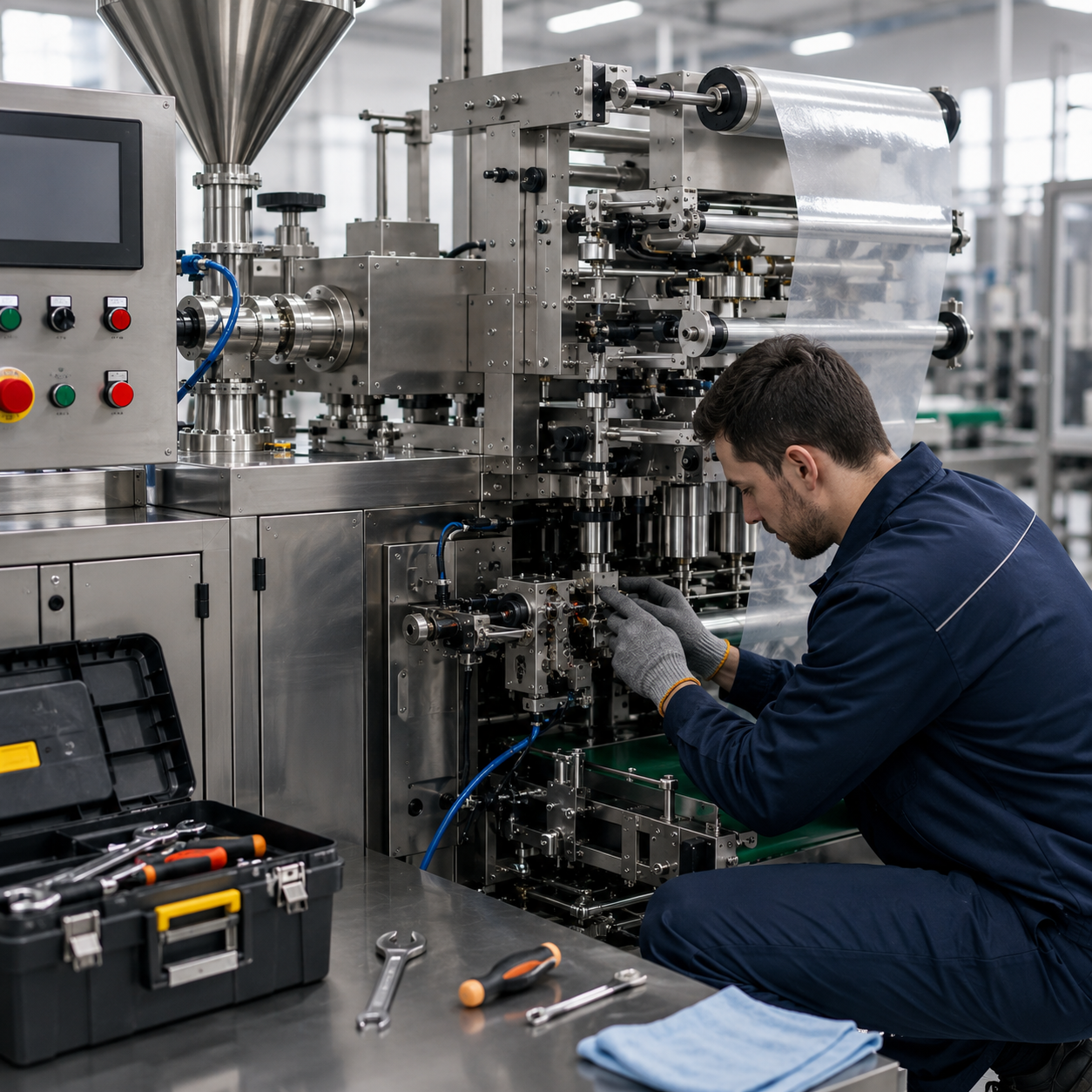
Packaging equipment is a critical part of modern manufacturing operations. Reliable machine performance directly affects production efficiency, product quality, delivery schedules, and operating costs. To keep a packaging machine running efficiently for many years, manufacturers should establish a preventive maintenance program rather than waiting for unexpected breakdowns. Proper maintenance helps reduce downtime, extend equipment life, and maintain
Why Preventive Maintenance Is Essential
A preventive maintenance schedule is one of the most effective ways to protect packaging equipment. Regular inspections help identify wear, loose components, lubrication issues, or abnormal operating conditions before they develop into major failures. By servicing the packaging machine at planned intervals, manufacturers can improve reliability, reduce emergency repair costs, and maintain stable production capacity.
Keep the Packaging Machine Clean
Dust, product residue, oil, and moisture can accumulate on filling systems, sealing units, conveyors, sensors, and mechanical parts. Routine cleaning prevents contamination, improves machine efficiency, and supports compliance with hygiene standards, especially in food, pharmaceutical, and cosmetic production. Cleaning procedures should include product-contact surfaces, guarding, sensors, and electrical enclosures while using approved cleaning agents and methods recommended by the machine manufacturer.
Lubrication and Mechanical Inspection
Moving components such as bearings, chains, gears, shafts, and guide rails require proper lubrication to reduce friction and wear. Manufacturers should follow the recommended lubrication schedule and use the specified lubricants for each component. During maintenance, technicians should also check belt tension, chain alignment, fasteners, pneumatic connections, and sealing mechanisms to ensure the packaging machine operates smoothly and accurately.
Spare Parts Planning and Inventory Control
Production interruptions often become longer when critical spare parts are not available. Maintaining an organized inventory of essential components such as sealing jaws, sensors, belts, bearings, nozzles, valves, and electrical parts helps reduce downtime. Working with a reliable packaging machine supplier ensures faster spare parts delivery and better long-term equipment support.
Monitor Performance and Detect Problems Early
Operators should monitor filling accuracy, sealing quality, machine speed, vibration, temperature, and unusual noise during daily production. Sudden changes in these indicators may signal developing mechanical or electrical issues. Recording maintenance data and machine performance trends makes it easier to identify recurring problems and schedule corrective actions before production is affected.
Train Operators and Maintenance Personnel
Well-trained operators can recognize abnormal machine behavior at an early stage and perform routine maintenance tasks correctly. Training should cover machine operation, cleaning procedures, safety practices, inspection points, and basic troubleshooting. Skilled personnel contribute significantly to the long-term reliability of a packaging machine and help prevent damage caused by improper operation.
Use Professional Service Support
Periodic inspections by qualified service engineers provide an additional level of protection for packaging equipment. Professional technicians can perform detailed diagnostics, software updates, calibration, and component replacement according to manufacturer standards. Scheduled service visits help maintain optimal machine performance and reduce the risk of unexpected production stoppages.
Create a Maintenance Schedule
An effective maintenance plan should include daily cleaning and inspection, weekly lubrication checks, monthly mechanical inspections, quarterly calibration and performance testing, and annual comprehensive servicing. Documenting all maintenance activities helps ensure consistency and supports equipment management across multiple production lines.
Conclusion
Proper packaging machine maintenance is a strategic investment that improves equipment reliability, extends service life, reduces operating costs, and supports continuous production. By implementing preventive maintenance, maintaining cleanliness, managing spare parts effectively, monitoring machine performance, training personnel, and using professional service support, manufacturers can maximize the performance and longevity of their packaging equipment while protecting product quality and production efficiency.