Automatic Cup Filling and Sealing Machine: Features, Working Principle and Applications
- Share
- Issue Time
- Sep 17,2026
Summary
Automatic cup filling and sealing machines provide an efficient solution for liquid and semi-liquid product packaging. They automate cup feeding, accurate filling, film sealing, and discharge, helping manufacturers improve production efficiency, packaging consistency, hygiene, and reduce labor costs.
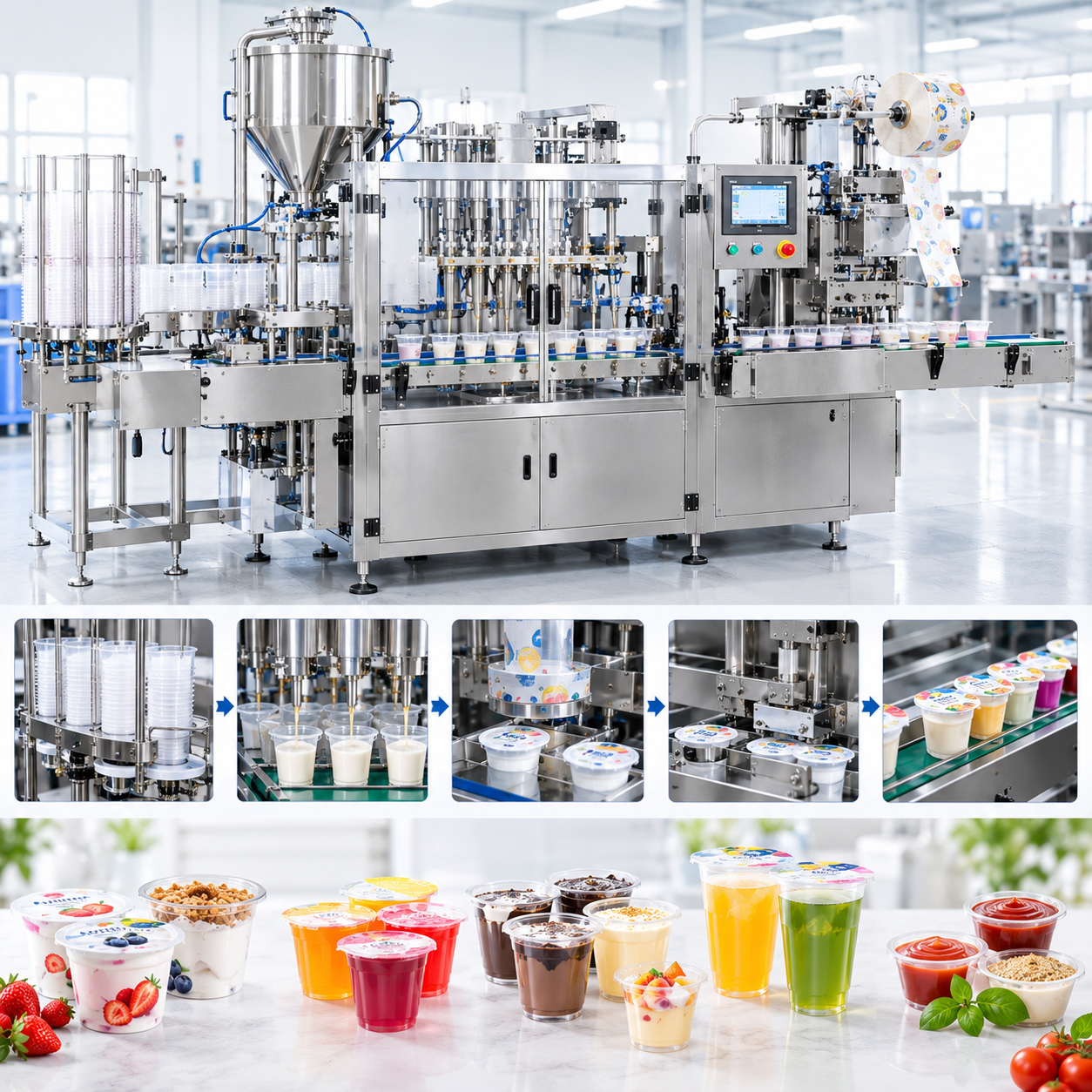
The automatic cup filling and sealing machine is an efficient packaging solution designed for filling liquid, semi-liquid, and viscous products into cups and sealing them with film. By combining automatic cup feeding, quantitative filling, film sealing, and finished product discharge, the machine helps manufacturers improve production efficiency, filling consistency, and packaging hygiene. It is widely used in food, beverage, dairy, dessert, and daily chemical production.
How Does an Automatic Cup Filling and Sealing Machine Work?
The machine operates through a continuous automated process. Empty cups are first supplied to the filling station by an automatic cup-feeding system. The filling unit then delivers a preset quantity of product into each cup with controlled accuracy. After filling, sealing film is positioned over the cup opening and heat-sealed to create a tight package. Finally, the sealed cups are discharged through the conveyor system for further processing or packing.
A PLC control system allows operators to adjust filling volume, sealing temperature, production speed, and other operating parameters according to different products and packaging requirements.
Key Features and Advantages
Accurate Filling:
The filling system provides consistent product dosing, helping reduce material waste and maintain uniform package weights.
Automatic Operation:
Cup loading, filling, sealing, and product discharge can be completed automatically, reducing manual labor and improving production efficiency.
Reliable Sealing:
Temperature-controlled sealing technology creates strong and clean seals, helping prevent leakage and protecting products from external contamination.
Flexible Product Compatibility:
The machine can be configured for different liquids, sauces, yogurt, beverages, creams, and other semi-liquid products.
Hygienic Construction:
Stainless steel contact components and an easy-to-clean structure support sanitary production requirements, especially for food and beverage applications.
Main Applications
Automatic cup filling and sealing machines are suitable for a wide range of products and industries.
Dairy Products: yogurt, milk, cream, and flavored dairy products
Beverages: juice, tea, coffee, and other liquid drinks
Food Products: sauces, ketchup, jam, honey, and desserts
Snack Products: pudding, jelly, and other ready-to-eat foods
Daily Chemicals: selected liquid and semi-liquid household products
The equipment can also be integrated with conveyors, coding systems, feeding units, and other packaging equipment to create a complete automated production line.
What to Consider Before Buying
When selecting an automatic cup filling and sealing machine, manufacturers should evaluate the product characteristics, cup size, filling volume, required production capacity, sealing film, and available factory space. Product viscosity and temperature can also affect the appropriate filling system.
For businesses with multiple products or packaging sizes, customized filling heads, cup molds, and control settings can provide greater production flexibility.
Conclusion
The automatic cup filling and sealing machine combines precise dosing, reliable sealing, and automated operation in one packaging system. It helps B2B manufacturers reduce labor requirements, improve package consistency, and maintain hygienic production. With suitable configuration and customization, it can support different products, cup formats, and production capacities while providing an efficient solution for modern cup packaging lines.